
Best National Parks in Kerala: Wildlife Experiences Worth Adding to Your Trip
Published on : October 12, 2026
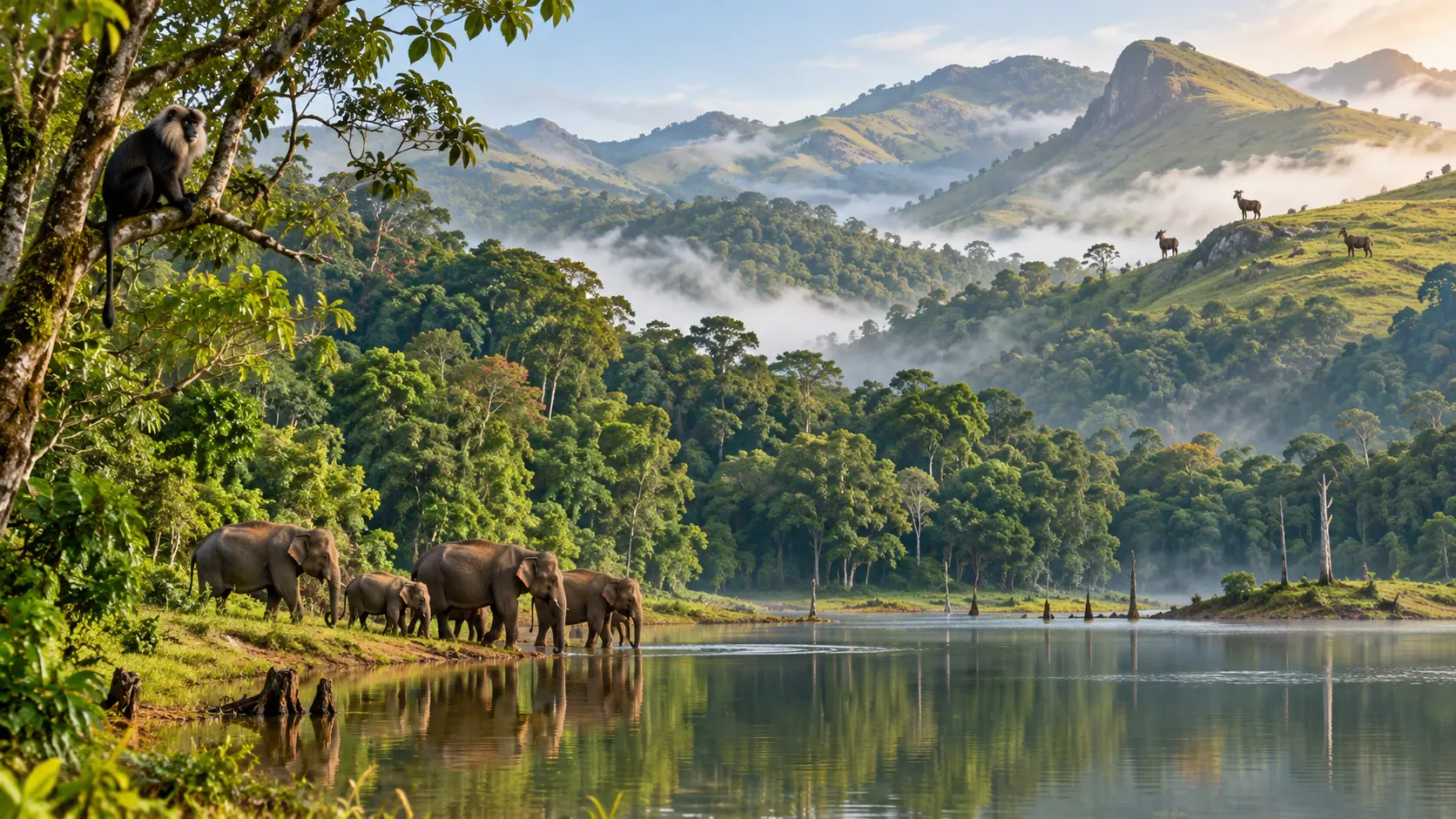
Kerala is best known for its backwaters, beaches, and tea-covered hills. But beyond the familiar postcard views, the state has another, wilder side.
The Western Ghats are home to dense forests, grasslands, rivers, and some of India’s most interesting wildlife. Elephants move through the forests, Nilgiri Tahrs graze on high mountain slopes, and rare monkeys live deep inside the rainforest.
For nature lovers, exploring Kerala’s national parks can add something completely different to a trip. You can take a boat through Periyar, look for mountain wildlife around Munnar, or walk through the ancient forests of Silent Valley.
This guide covers Kerala’s main national parks, wildlife sanctuaries, and tiger reserves, along with the best time to visit and what to expect.
Kerala has six national parks:
The state also has more than a dozen wildlife sanctuaries and two major tiger reserves. Together, these protected areas cover a significant part of the Western Ghats, one of India’s richest regions for plant and animal life.
So while there are six national parks, many more places fit into a Kerala wildlife itinerary.
If wildlife is one of the main reasons for your Kerala trip, Periyar is an excellent place to start.
Located around Periyar Lake near Thekkady, the reserve is particularly known for its wild elephants. The lake is also what makes a visit here different from a typical jungle safari.
A boat ride on Periyar Lake is one of the most popular experiences. From the water, you may see elephants, deer, wild boar, and a variety of birds near the shoreline.
Periyar is also a tiger reserve, although seeing a tiger requires plenty of patience and luck. Tigers are naturally elusive, so don’t treat them as a guaranteed sighting.
You can also explore the reserve in other ways, including guided nature walks, bamboo rafting, and short forest trails.
A nature walk near Periyar National Park can be especially rewarding if you want to notice the forest’s smaller details, from bird calls to animal tracks.
High above Munnar, the landscape changes from tea plantations to rolling grasslands and shola forests.
Eravikulam National Park is the largest national park in Kerala and one of the best places to see the Nilgiri Tahr.
The Nilgiri Tahr is a rare mountain goat found in the Western Ghats. You can often see them grazing across the hills, sometimes surprisingly close to the designated visitor areas.
The wildlife is only part of the attraction.
The park’s high-altitude grasslands offer wide views across the Western Ghats, while early mornings can bring mist over the hills. The landscape changes considerably with the seasons.
Eravikulam is also associated with Neelakurinji, a flower that blooms in mass every twelve years and turns sections of the hills purple.
The park uses shuttle buses in some visitor areas to reduce pressure on the environment. It also closes during part of the year for the Nilgiri Tahr’s calving season, so check the current visitor schedule before planning a visit.
Silent Valley feels very different from Kerala’s more accessible wildlife destinations.
Located in Palakkad district, it protects one of the state’s remaining areas of relatively undisturbed tropical rainforest. The forest is dense, green, and full of bird calls, insects, and other signs of life.
One of its most famous residents is the lion-tailed macaque, a rare primate found only in the Western Ghats.
The park is also important for birdwatching and plant diversity. Guided forest visits and designated viewpoints let visitors experience the landscape without disturbing the fragile ecosystem.
Wayanad offers another excellent opportunity to see Kerala’s wildlife.
The sanctuary forms part of a larger protected forest landscape that extends into neighboring Karnataka and Tamil Nadu. This connected habitat allows animals to move across a much wider area.
Elephants are among the main attractions. Depending on the season and conditions, you may also see spotted deer, gaur, and a variety of birds. Leopards and tigers are present in the wider landscape, but sightings are far less predictable.
Jeep safaris are the most popular way to explore the forest.
The surrounding Wayanad region also makes a good base for travelers who want to combine wildlife with waterfalls, caves, spice plantations, and quiet hill scenery.
For a quieter wildlife experience, consider Parambikulam Tiger Reserve.
Located between the Anamalai Hills and the Nelliampathy range, the reserve is known for its protected forests and relatively low visitor numbers compared with some of Kerala’s better-known wildlife destinations.
Tigers, leopards, elephants, and other species live within the reserve. One notable natural landmark is the Kannimara teak, a giant tree considered among the largest of its kind in Asia.
Local tribal communities also have a connection with the reserve, and some community members work as guides. This adds another layer to a visit, especially for travelers interested in the relationship between local communities and the forest.
Chinnar is unlike most of Kerala’s other wildlife areas.
The sanctuary lies in a rain-shadow region, so the landscape is drier than the lush forests found elsewhere in the state. You will see scrubland, grasslands, and open woodland rather than dense rainforest.
This unusual habitat supports wildlife such as the grizzled giant squirrel, along with spotted deer, wild goats, and several bird species.
Chinnar is also home to Thoovanam Waterfalls and trekking routes, making it a good option for visitors who want to combine wildlife with a little walking.
Its location on the route between Munnar and Tamil Nadu also makes it relatively easy to add to a wider itinerary.
Three smaller national parks near Munnar protect the unique shola ecosystem.
This landscape combines patches of evergreen forest with open high-altitude grasslands and is characteristic of parts of the Western Ghats.
Named after Anamudi, the highest peak in South India, this park protects high-altitude forests and grasslands. Wildlife includes Nilgiri Tahr, leopards, and the elusive Nilgiri marten.
This is a dense, misty forest area known for its birdlife and butterflies. It is a good choice for visitors who enjoy quieter forest environments.
Pampadum Shola is Kerala’s smallest national park. Its forests support flying squirrels and a variety of bird species.
These three parks suit travelers who enjoy walking, nature, and less-visited areas rather than conventional sightseeing.
Kerala’s wildlife experiences are not limited to national parks.
A few other protected areas are worth considering depending on your route and interests:
If wildlife is a major part of your holiday, it may make sense to combine more than one reserve rather than rely on a single safari.
A well-planned India wildlife tour can also combine Kerala’s wildlife areas with other major wildlife destinations across India.
A little preparation can make your wildlife experience much more enjoyable.
Animals are often more active in the early morning and late afternoon. So, early morning safaris and boat rides are a good choice.
Periyar and Eravikulam can become busy during the main travel season. Visitor numbers and safari or boat slots may be limited, so booking ahead is sensible.
A trained guide can help you understand the forest and spot wildlife that you might otherwise walk straight past. They also know how to move through protected areas responsibly.
Comfortable walking shoes, light clothing, and long sleeves are useful for forest visits. During wetter months, conditions can be muddy, and leeches may be present on some trails.
Keep a safe distance from wild animals. Avoid feeding them, disturbing them, or getting too close for a photograph. Staying quiet helps you enjoy a more natural wildlife experience.
For most wildlife experiences, October through March is the most comfortable period.
The weather is generally pleasant, trails are easier to explore, and animals may gather around available water sources.
April and May can also be productive for wildlife viewing. Temperatures are higher, but animals may become easier to find around shrinking water sources.
The June to September monsoon transforms Kerala’s forests into an intense shade of green. However, heavy rain can make some trails muddy and may affect access to certain areas.
The best month therefore depends on what matters most to you: comfortable sightseeing, wildlife viewing, photography, or experiencing Kerala’s forests during the rainy season.
Kerala has six national parks: Eravikulam, Silent Valley, Periyar, Anamudi Shola, Mathikettan Shola, and Pampadum Shola.
Tigers are found in protected areas such as Periyar and Parambikulam. Sightings are possible but never guaranteed.
Yes, Periyar and Eravikulam are suitable for family visits, with options such as boat rides, shuttle services, and shorter nature experiences.
October to March is generally the best time to visit. April and May can also be good months for wildlife viewing.
Yes, especially for popular parks such as Periyar and Eravikulam. Safari, boat, and visitor slots can fill up during peak season.
Periyar National Park is a popular choice for elephants, boat rides, and forest experiences. Eravikulam is ideal for spotting the Nilgiri Tahr.
Our travel experts are here to help you craft the perfect itinerary — stress-free and tailored just for you.
Contact Our Travel Experts
Radisson Varanasi You are in Varanasi, the holiest temple town of Hindus, and wish nothing but the very best of…

Delhi, the heartbeat of India, doesn’t fit neatly into a single postcard. Not one, but in reality, it’s three cities…
Some places make you slow down the moment you arrive. Munnar is one of them. Set high in Kerala’s Western…

By:Bespoke admin
March 26, 2010
If nature is the only thing you need to recuperate, backpack to Wayanad for a “natural” boot-camp in a tree-house. Experience a remix of…
Read Post
By:Bespoke admin
December 20, 2025
This luxury India tour guide is researched and maintained by the Bespoke India Holidays team, a licensed luxury tour operator based in India with 15+…
Read Post
By:Acodez Web
September 3, 2026
Most people give Agra one day. They arrive for sunrise at the Taj Mahal, take their photographs, have lunch, and leave for Jaipur or Delhi…
Read Post