
Best Places to Visit in Agra Beyond the Taj Mahal
Published on : September 3, 2026

Most people give Agra one day. They arrive for sunrise at the Taj Mahal, take their photographs, have lunch, and leave for Jaipur or Delhi by mid-afternoon. It is an understandable choice, but it misses most of what the city actually has to offer.
Agra served as the capital of the Mughal Empire for much of the 16th and 17th centuries. That history left behind forts, tombs, gardens, markets, and a deep-rooted food culture. The Taj Mahal is the most famous of these, but it was never built in isolation. It was built within a city already full of remarkable sights. Spending two nights here instead of one gives you the time to find them.
This guide covers the best places to visit in Agra beyond the Taj Mahal. It is for travelers who want more than a monument checklist. If you are planning a Golden Triangle tour, building in at least two full days in Agra will make the entire route feel more rewarding.
Before you head out, you should note that the Archaeological Survey of India manages most major monuments in Agra. Carry some cash for entry fees. Wear comfortable shoes. Start early if you are visiting between April and June, when midday temperatures regularly cross 40°C.
The Taj Mahal tells Shah Jahan’s story of grief. Agra Fort tells you about Mughal power across three generations.
Emperor Akbar began building the fort in 1565 using red sandstone. Jahangir and Shah Jahan added marble palaces and private chambers over the following decades. The result is a layered complex covering roughly 2.5 kilometers along the Yamuna River. It is a UNESCO World Heritage Site and one of India’s most significant Mughal monuments.
For many visitors, the most striking part of the fort is the Musamman Burj. This octagonal marble tower is where Shah Jahan was confined by his son Aurangzeb in his final years. From its windows, he had a clear view of the Taj Mahal across the river. That detail alone makes the fort essential. It connects the two monuments in a way that no tour guide summary can fully capture.
Other key structures include the Diwan-i-Aam, where the emperor met his subjects, and the Diwan-i-Khas, a more intimate audience hall with fine marble inlay. The Jahangiri Mahal is one of the oldest palaces in the complex. It has a mix of Islamic and Hindu design and reflects how Mughal architecture evolved over time.
Entry fee: Approx. USD 7.50 per person
Timings: Sunrise to sunset, open daily.
Distance from Taj Mahal: About 2.5 kilometers; a 10-minute drive.
Plan around 2 to 3 hours here. Many travelers visit the Taj at sunrise and then walk or drive to the fort for the late morning. That sequence works well for light and energy.
About 37 kilometers from central Agra, on the road toward Jaipur, sits one of the most unusual places in India.
Emperor Akbar built Fatehpur Sikri in the 1570s as his new capital. It was a planned city of red sandstone palaces, mosques, courtyards, and administrative buildings. He abandoned it about 14 years later, reportedly because of water shortages. Today, it stands almost exactly as he left it, and it is a UNESCO World Heritage Site.
The Buland Darwaza, built to mark Akbar’s victory in Gujarat, is one of the world’s largest gateways. Standing underneath it gives you a sense of the scale Akbar was working with. The Jama Masjid, still active, has a quiet courtyard worth spending time in. The Tomb of Salim Chishti inside the complex is known for its intricate marble lattice screens. Panch Mahal, a five-storey open pavilion with progressively smaller floors, was likely a pleasure palace for the royal household.
Most visitors take 2 to 3 hours here. The site is open-air, so carry water and wear sunscreen.
Entry fee: Approx. USD 7.30 to USD 7.50 per person
Timings: Sunrise to sunset, open daily.
How to reach: About 1 hour by car from central Agra. Many travelers stop here en route between Agra and Jaipur, which saves time and avoids backtracking.
If your trip covers the Golden Triangle circuit, we often include Fatehpur Sikri as a natural stop between Agra and Jaipur. You can see it on a tailor-made private India tour without adding extra drive time to your day.
Locally called the “Baby Taj,” this small mausoleum on the eastern bank of the Yamuna was built between 1622 and 1628. Nur Jahan commissioned it for her father, Mirza Ghiyas Beg. It predates the Taj Mahal by almost a decade. It is widely considered the monument where pietra dura, the technique of inlaying marble with semi-precious stones, reached its full expression in Mughal architecture.
The exterior has intricate patterns of lapis lazuli, onyx, jasper, and other stones. The lattice screens, called jalis, filter the light, making the interior feel quiet and cool even on warm mornings. Unlike the Taj, you will not find large crowds here.
Entry fee: Approx. USD 3.24 per person
Timings: Sunrise to sunset, open daily including Fridays.
Distance from Taj Mahal: About 3 kilometers; 10 to 15 minutes by auto-rickshaw.
Combine this with Chini ka Rauza nearby for a half-day on the eastern bank of the Yamuna.
Mehtab Bagh translates as “Moonlight Garden.” It sits directly across the Yamuna from the Taj Mahal, positioned on the same north-south axis as the monument. Visiting in the late afternoon, around 04:30 p.m. to 06:30 p.m., gives you a sunset view of the Taj that most visitors to Agra never see.
The garden has been restored with lawns, walkways, fountains, and a viewing platform. It is calmer than the Taj complex. Travelers often describe it as the place where they finally had a moment to simply look at the Taj without the crowd pressing around them.
There is also a Kachhpura Village Walk that runs near the Mehtab Bagh area. It takes you through agricultural fields and the ancient village of Kachhpura, where community wall paintings and a small Mughal-era mosque offer a completely different side of Agra.
Entry fee: Approx. USD 3.60 per person
Timings: 06:00 a.m. to 09:00 p.m.
Distance from Taj Mahal: About 4 kilometers; 10 minutes by road.
About 10 kilometers northwest of central Agra, on the road toward Delhi, is the final resting place of Emperor Akbar.
Akbar is often regarded as the greatest of the Mughal rulers. His tomb at Sikandra directly reflects his ideas about religion and empire. The structure blends Islamic, Hindu, Buddhist, and Christian architectural elements in an unusual, deliberate way. Akbar called this approach Din-i-Ilahi, a syncretic personal faith that drew from multiple traditions. The tomb makes that visible in stone.
The lower levels are red sandstone with Hindu-style brackets. The upper levels become progressively more Islamic in character. The surrounding charbagh garden is large and well-maintained. Peacocks are often seen on the lawns.
Entry fee: Approx. USD 3.70 per person
Timings: Sunrise to sunset, open daily.
Sikandra is best combined with a drive to or from Delhi. It fits naturally at the start or end of a North India tour without requiring a separate half-day excursion.
Chini ka Rauza is not on most tourist maps, which is part of why it is worth visiting.
Built in 1639, it is the tomb of Allama Afzal Khan Shirazi, a poet and senior minister in Shah Jahan’s court. The name means “Chinese House,” a reference to the glazed tiles that once covered the structure in Persian-style patterns of blue, turquoise, and yellow. Much of the tilework has faded or fallen away over the centuries. What remains is fragmented but striking.
The monument does not get much crowds. It is located near Itmad-ud-Daulah and can be combined with a visit there on the same morning. Entry is usually free.
Timings: Daylight hours; confirm locally.
Distance from Taj Mahal: About 6 kilometers.
No visit to Agra feels complete without at least a few hours in its markets.
Kinari Bazaar, in the old city near Jama Masjid, is where you find zardozi embroidery, bridal fabrics, bangles, and spices in narrow lanes that have looked much the same for generations. The best time to visit is early morning, around 07:30 a.m. to 09:00 a.m., when breakfast stalls are open, and the market is calm. Bedai with jalebi, a classic Agra breakfast of spiced lentil bread with syrupy jalebi, is worth stopping for.
Sadar Bazaar is Agra’s main commercial market. It is known for leather goods, clothing, and petha, the translucent sweet made from ash gourd that Agra is famous for. Panchhi Petha near Hari Parbat Crossing is one of the most reliable shops for buying it. Evenings, from around 05:00 p.m. onward, are the liveliest time to visit Sadar Bazaar.
You can also take an Art and Craft Tour of Agra to explore the city’s craft traditions more closely. Marble inlay workshops near the Taj Ganj area allow you to watch artisans at work and understand the craft that built the Taj’s decorative panels.
The months from October to March offer the most practical window for visiting Agra. Mornings are cool, afternoons are manageable, and the light is good for photography. December and January bring occasional early morning fog around the Yamuna, which can affect sunrise views at the Taj.
April to June is very hot. It is best to plan outdoor sightseeing either before 10:00 a.m., or after 04:00 p.m. July to September bring monsoon humidity and some heavy rain. The monuments can look dramatic in overcast light, but you must be prepared for disruptions.
A two-night stay in Agra gives you enough time to visit the Taj Mahal, Agra Fort, Itmad-ud-Daulah, Mehtab Bagh, and Fatehpur Sikri without rushing. A third night lets you add Sikandra, Chini ka Rauza, and time in the markets. If you are planning a luxury Golden Triangle tour and want a hotel close to the monuments, the Oberoi Amarvilas is about 600 meters from the Taj and offers views of the monument from every room.
Two nights give you enough time for the Taj, Agra Fort, Itmad-ud-Daulah, and Mehtab Bagh comfortably. A third night allows you to add Fatehpur Sikri and Sikandra without rushing.
Yes, especially if you are already heading toward Jaipur. It adds less than an hour to your journey and gives you a completely different Mughal experience from anything in central Agra.
Yes. The most common approach is the Taj at sunrise, then Agra Fort in the late morning. They are about 2.5 kilometers apart. Splitting them across two days gives you better energy at both.
Late afternoon, around 04:30 p.m. to 06:30 p.m. The sunset view of the Taj from across the Yamuna is one of the best in Agra.
Agra is one of the strongest heritage destinations in India. Three of its sites, the Taj Mahal, Agra Fort, and Fatehpur Sikri, are UNESCO World Heritage Sites. If heritage travel is your focus, a heritage tour of India can be built around Agra as a central stop.
Our travel experts are here to help you craft the perfect itinerary — stress-free and tailored just for you.
Contact Our Travel Experts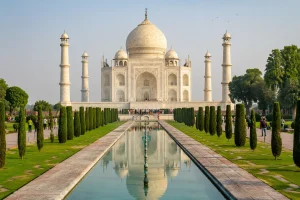
Most people think they already know the Taj Mahal. They have seen the photos and read about the love story.…

Most people give Agra one day. They arrive for sunrise at the Taj Mahal, take their photographs, have lunch, and…
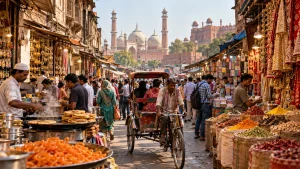
Step into Old Delhi and you step into a different side of the capital. Narrow lanes wind past old havelis,…
By:Bespoke admin
July 2, 2020
Located in the northern Indian states of Sikkim, Gangtok is a capital city and an irresistible place in the lap of Himalayas. One can reach…
Read Post
By:Acodez Web
September 23, 2026
Most luxury travelers pass through Jaipur as part of India’s Golden Triangle, staying there for two or three nights before continuing on their journey. During…
Read Post
By:Acodez Web
October 6, 2026
Deciding between Ranthambore or Bandhavgarh is one of the most common questions US travelers ask when planning a wildlife safari in India. It is perfectly…
Read Post