
Best Things to Do in Delhi for First-Time Visitors
Published on : September 4, 2026
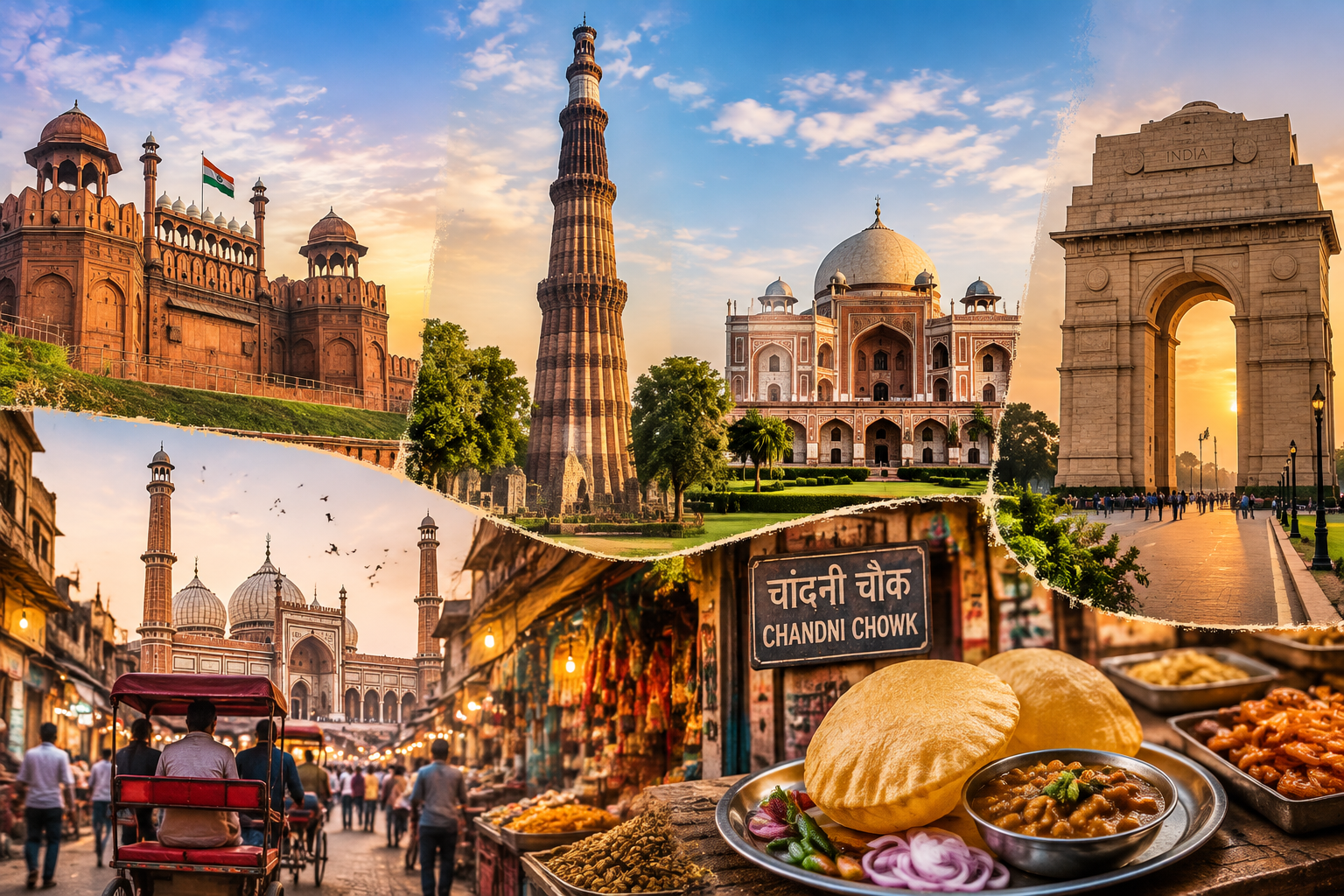
Delhi doesn’t ease first-time visitors. One afternoon you’re staring up at the city’s tallest flex, and an hour later you’re elbow-deep in a plate of chole bhature. As the evening crowd thins out, you’re watching the sun set from a 400-year-old fort lit gold. An hour later, the smell of jalebi frying in ghee down a lane that hasn’t changed its recipe in a century may put your diet at stake. With three millennia of history, the city hands visitors all of India in a single stretch of streets.
Bespoke India Holidays plans tours for you, and if there’s one thing we hear often, it’s some version of “I didn’t expect to love it this much.” You can join us for your next tour to Delhi to experience the best things this city has to offer, alone or combined with a Golden Triangle itinerary covering Agra and Jaipur.
In Delhi, you’re not visiting one city, but about eight of them, stacked on top of each other over nearly a thousand years. Ruled, built, and rebuilt many times layer by layer, dynasty by dynasty, before it became the capital you fly in today.
Representing the dominion of the empire that built Delhi’s skyline, the Red Fort was home to Mughal emperors for over 200 years. Walk through the Lahori Gate, and you’re inside the octagonal red sandstone walls of the hall that stretches for over 1.5 miles around marble pavilions and the Diwan-i-Khas, a hall once inlaid with precious stones. UNESCO designated it as a World Heritage Site in 2007, and honestly, once you’re standing inside, you’ll understand why.
Our advice is, get there right when it opens since Delhi’s heat and crowds both build fast. Mornings are noticeably cooler and quieter than afternoons. So, make it your first stop. If you stick around in the evening, the sound-and-light show is a genuinely good way to close out a day of Delhi heritage sightseeing.
Standing 73 meters tall above Mehrauli, Qutub Minar is the world’s tallest brick minaret with five tapering stories and 399 steps. On closer look, you’ll find verses from the Quran carved into the stone eight centuries ago. Right next to it sits the Iron Pillar of Chandragupta Maurya, which has resisted rust for over 1,600 years now, documented extensively by the Archaeological Survey of India (ASI).
In 2024, it alone drew close to 320,000 domestic visitors, according to the same India Tourism Data Compendium 2025 referred to earlier.
Built in 1570 during the Sultanate era, Humayun’s Tomb was India’s very first garden-tomb. It is often referred to as the Taj Mahal’s older sibling, due to similarity in design. Set within a formal Persian Charbagh garden, the red sandstone and white marble structure gets a fraction of crowd, which makes this place much more peaceful. UNESCO marked it as a World Heritage Site in 1993, the same year as Qutub Minar.
Formerly known as Shahjahanabad, Old Delhi is where the city’s Mughal-era energy is still alive, where you can understand the city best. From the Red Fort, walk to Jama Masjid, which is just on the opposite side. India’s largest 17th-century mosque, it can hold 25,000 worshippers. For a small camera fee, you can get sweeping rooftop views over Old Delhi.
Once out, let a cycle-rickshaw carry you through Chandni Chowk and Khari Baoli, Asia’s largest wholesale spice market. Spend some time, absorb the aromas of pure saffron, cardamom, and mace, and stroll through textile and jewelry lanes with historic storefronts that have run in the same families for generations.
Save your appetite for one of the non-negotiable top things to do in Delhi: a food walk through Parathe Wali Gali. Taste some stuffed parathas, chaat, and jalebi while you navigate through the lanes.
Schedule your Old Delhi visit between 9:00 am and 12:00 noon to avoid crowds and enjoy optimal lighting for heritage photography.
In contrast to the dense lanes of old Delhi, New Delhi is wide open. Less crowded, with trees across the street and neoclassical government buildings designed by Sir Edwin Lutyens in the 20th century.
As the light softens, head to India Gate, a 42-meter-high war memorial honoring more than 70,000 Indian soldiers who died in World War I, with the Amar Jawan Jyoti flame burning at its base.
Past the memorial is Kartavya Path, formerly known as Rajpath, surrounded by lawns that come alive in the evening with families, food carts, and boat rides on the adjoining ponds. Take a short drive to Rashtrapati Bhavan (the President’s residence) and the North and South Block government buildings, a good way to understand how the British-era capital was planned.
Shaped like a 27-petaled white lotus flower crafted from pure white Pentelic marble, the Lotus Temple is a Bahá’í house of worship, open to visitors of all faiths for silent meditation. Meanwhile, Swaminarayan Akshardham is one of the largest Hindu temple complexes in the world. It is built entirely without structural steel and combines intricately carved stone architecture with musical fountains and exhibitions on Indian philosophy.
Both are free to enter (Akshardham charges for its exhibitions) and represent a different spiritual life of Delhi.
From boutique retail in Khan Market to contemporary Michelin-caliber dining at Indian Accent, Delhi is the place for foodies and fashion enthusiasts. And for shopping that doesn’t feel like a tourist trap, Dilli Haat is the move. It is an open-air crafts market where artisans from every Indian state sell textiles, pottery, and jewelry directly, alongside regional food stalls representing multiple states under one roof.
If you want a more contemporary evening, Hauz Khas Village pairs rooftop cafes with a backdrop of the 14th-century ruins of a madrasa and tomb overlooking a lake, built during the Delhi Sultanate.
Beyond the headline monuments, a little extra time in Delhi opens up the city that locals actually live in and the ones people remember longest.
Qawwali at Nizamuddin Dargah: Every Thursday evening, devotional Sufi singers perform live at the shrine of saint Hazrat Nizamuddin Auliya, a tradition that has continued for over 700 years in the narrow lanes surrounding the dargah. It’s raw and moving.
Sunder Nursery: It is a restored 16th-century Mughal-era heritage park next to Humayun’s Tomb. With far fewer crowds and just as much history, you can spend your time at the manicured gardens and an Amphitheater.
National Museum and National Gallery of Modern Art: It is worth an hour if you want context for everything you’ll see elsewhere in Delhi and across an India tour, from the Indus Valley Civilization to the Mughal era.
Raj Ghat: It is a simple black marble platform marking the site of Mahatma Gandhi’s cremation, set within quiet and brief lawns.
October through March is the best time without much debate. Daytime temperatures sit around 15-25°C (59-77°F), skies are mostly clear, apart from a foggy stretch in late December and January that can occasionally delay flights. You’ll actually enjoy walking around outdoors. April to June, on the other hand, is intensely hot. Temperatures usually climb past 40°C (104°F), and the July-to-September monsoon brings short but heavy downpours. It’s the same window recommended for luxury travel across India more broadly. Booking Delhi for cooler months makes it easy and comfortable to continue on to Agra, Jaipur, Rajasthan, or beyond.
Everything above works on paper. In practice, sequencing, timing, and having someone who knows exactly which gate to enter through and which hour to avoid helps make the trip comfortable. It’s just what we do every day for travelers who’d rather spend their energy enjoying Delhi than researching it.
Select your accommodation category, share your travel dates, and tell us what you’re most drawn to, and we’ll build the days around it. Our Design Your Trip tool takes a few minutes, and a National Tourism Award-winning travel advisor gets back to you within 48 to 72 hours with a plan made for you.
That’s not all. Every Bespoke India Holidays Delhi tour comes with a private vehicle and driver, local guides who actually know the stories behind the stone, and 24/7 on-ground support. Don’t just take our word for it; go for the guest reviews. Before you book flights, our India travel tips page covers visas, packing, and everything else worth knowing in advance, so it’s worth taking a look.
If you’re planning to travel further south into India’s tranquil backwaters, check our Kerala tours for luxury houseboat retreats and wellness Sanctuaries.
Two to three full days easily gets you through the major part of the city: the Red Fort, Qutub Minar, Humayun’s Tomb, India Gate, and old Delhi’s streets. If you want to slow down, add Akshardham, or squeeze in a trip to Agra, you can give yourself a fourth day.
Yes, in general it is a safe city. But we advise general precautions that you’d consider in any major capital city. As a standard practice, stick to well-known areas, use registered taxis after dark, and keep an eye on your valuables in crowded markets. Traveling with a private driver and guide, which is standard on our itineraries, removes most of the guesswork.
The Delhi Metro is quick, affordable, and covers most tourist areas. However, a private car makes far more sense once your day involves multiple monuments spread across the city, especially in the heat. Cycle-rickshaws are the only real way to explore the narrow lanes of Old Delhi, where cars can’t go.
Cover your shoulders and knees; that’s the general rule at Jama Masjid, the Lotus Temple, and most religious sites. You’ll have to take your shoes off before entering, and women need a headscarf at Jama Masjid and inside Sikh gurudwaras. Scarves are usually available to borrow on-site if you forget one.
Our travel experts are here to help you craft the perfect itinerary — stress-free and tailored just for you.
Contact Our Travel Experts
Kerala is one of the few places in India where the weather can shape the entire travel experience. The same…
Step into Old Delhi and you step into a different side of the capital. Narrow lanes wind past old havelis,…
Planning a trip in the “luxury” is about more than whether you stay in 5-star hotels and eat at expensive…
By:Acodez Web
August 12, 2026
There is a reason most first-time visitors to India choose Delhi, Agra, and Jaipur. These three cities are close enough to form an easy travel…
Read Post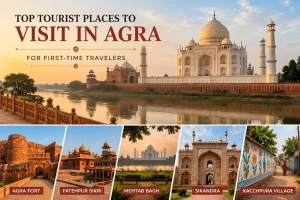
By:Acodez Web
September 3, 2026
Agra tends to catch first-time travelers off guard. You arrive expecting a monument and leave having understood an empire. The Taj Mahal is extraordinary. Nothing…
Read Post
By:Acodez Web
October 6, 2026
India is a country that resists vague planning. The distance from the US alone demands a well-considered itinerary. The range of experiences on offer, from…
Read Post