
Luxury Trips in India: How to Plan the Perfect Private India Holiday
Published on : October 6, 2026
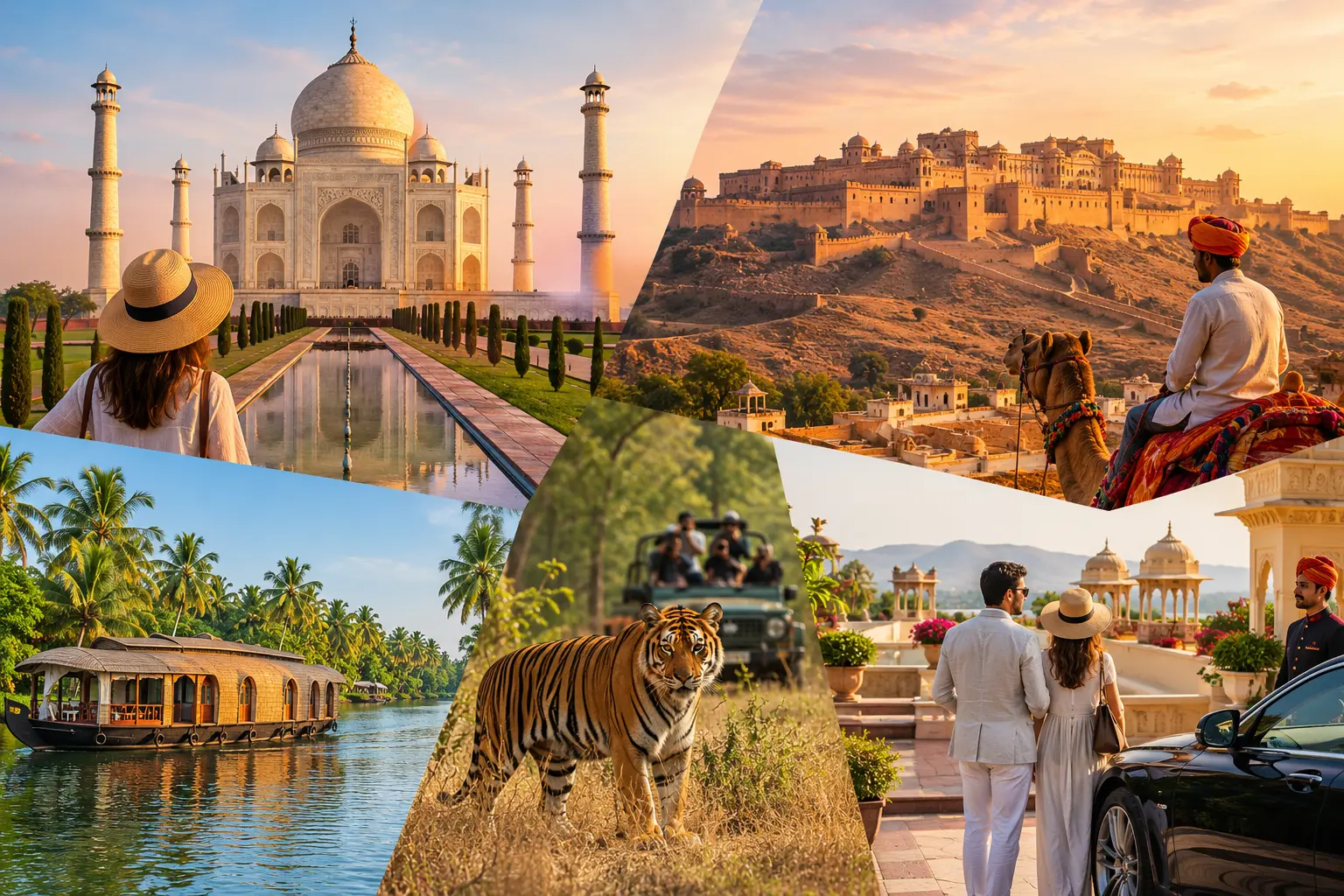
India is a country that resists vague planning. The distance from the US alone demands a well-considered itinerary. The range of experiences on offer, from Rajput palaces in the Thar Desert to Kerala’s backwater networks to tiger reserves in Madhya Pradesh, is wide enough that choosing without direction leads to a trip that covers ground but never goes deep. Luxury trips in India work best when they are built around a clear travel identity: what you want to feel, experience, and take away, rather than a checklist of famous sites. When that framework exists, every decision from which region to which hotel to how many days in each place becomes considerably easier.
The structural advantage of luxury India vacations over independent travel is not simply comfort. It is access and time. A private guide at Amber Fort or the Taj Mahal changes the experience from impressive to genuinely understood. A butler-serviced palace room in Udaipur or Jaipur, booked months ahead through someone who knows which rooms have the right views, gives you an accommodation that reflects where you are rather than just where you are sleeping. A private car throughout the trip means you move on your schedule, not a shared one. None of those things are theoretical. They shape every day on the ground.
This guide covers the full planning process for a private luxury tour in India: which regions to choose, how to structure the itinerary, how to pick the right accommodation tier, and what the practical logistics look like. It is written specifically for US travelers planning their first or second private India holiday, with enough detail to make the major decisions confidently before you book.
One honest note upfront: luxury trips in India reward longer itineraries. India is not a country that reveals itself in four days. Most experienced India travelers say the minimum worthwhile trip is ten days, and that fourteen to sixteen days is where a private itinerary genuinely opens up. If you are flying business class from New York or Los Angeles and spending on palace hotels, shortchanging the trip on time is the one decision most travelers say they regretted.
The single most important decision in planning luxury India vacations is which part of the country to focus on. India’s regions are genuinely different from each other in climate, architecture, food, landscape, and pace. Trying to cover too many in one trip produces a schedule that spends more time on domestic flights and car transfers than at the destinations themselves.
| Region | Best For | Ideal Duration | Peak Season |
| Golden Triangle (Delhi, Agra, Jaipur) | Mughal monuments, first India visit, palace hotels | 6 to 8 days | October to March |
| Rajasthan (Jaipur, Jodhpur, Udaipur, Jaisalmer) | Royal palaces, desert forts, heritage architecture | 8 to 12 days | October to March |
| Kerala (Kochi, Munnar, Alleppey, Kovalam) | Backwaters, wellness, hill stations, beaches | 8 to 10 days | October to March |
| Wildlife Circuit (Ranthambore, Bandhavgarh, Kanha) | Tiger safaris, jungle camps, nature immersion | 6 to 10 days | October to June |
| North and South Combined | Complete India picture, honeymoons, extended trips | 14 to 18 days | October to March |
Most travelers planning a first luxury tour in India choose between two starting points: Rajasthan and the Golden Triangle in the north, or Kerala in the south. Both are mature luxury destinations with strong hotel infrastructure and experienced guides. The north offers more historical density and a wider range of palace hotel experiences. The south offers a slower pace, greener landscape, and the best wellness travel in the country. If you have more than twelve days, combining both with a short domestic flight between Delhi and Kochi is the most complete first India trip you can make.
The most common regret on luxury India vacations is not spending enough time in each place. Two nights per city is a functional minimum. It gives you one full day for the headline sightseeing and one morning to revisit what mattered, walk somewhere unhurried, or simply spend time at your hotel. One-night stops feel like transit rather than a destination, and at the accommodation prices involved in a genuine luxury tour in India, rushing through a palace hotel suite is a poor use of both money and experience.
A practical pacing framework for a 12-day North India itinerary looks like this:
This structure gives every stop enough time to settle into it. Travelers who have completed this circuit consistently note that Udaipur benefits most from the extra night. It is the city on the route where slowing down makes the biggest difference to how the whole trip feels.
The accommodation choices on luxury trips in India are not all equivalent just because they share the same price tier. India’s palace hotels offer something that a standard five-star hotel cannot: a building with its own story, architecture, and place in Indian history. The difference in how a trip feels when your hotel was once a Maharaja’s residence versus a purpose-built international five-star is real and sustained across the whole stay.
Rajasthan has the strongest concentration of genuine palace hotels in the world. Rambagh Palace in Jaipur, originally built in 1835, is the most celebrated. The Taj Lake Palace in Udaipur sits on a 17th-century island in Lake Pichola and is reachable only by boat. Umaid Bhawan Palace in Jodhpur is still partly inhabited by the royal family and the hotel occupies only the residential wing. These properties start at $400 to $600 per room per night in shoulder season and climb significantly higher in December and January. Book six to nine months ahead for December and January travel. The best room categories at these properties are genuinely limited in number.
For Delhi and Agra, the flagship properties from Oberoi and Taj Hotels are the standard reference points. Oberoi Amarvilas in Agra offers Taj Mahal views from every room and consistently ranks among the finest hotel experiences in Asia. In Delhi, The Leela Palace and The Imperial offer colonial-era grandeur in the heart of the city.
For Ranthambore and the central India wildlife circuit, the accommodation model shifts from palace to tented camp. The best camps offer private plunge pools, butler service, and experienced naturalists on staff. Oberoi Vanyavilas at Ranthambore is the reference luxury camp for the region. Rates start around $700 to $900 per night. Book game drive permits well in advance. Peak park zones fill months ahead during October through March.
Private guiding is the element of luxury trips in India that most travelers undervalue at the planning stage and most appreciate in hindsight. A private guide at the Taj Mahal is not just a source of historical information. They manage your timing, take you to the angles most visitors miss, tell you which crowds to bypass, and adjust the entire visit based on what interests you. The same applies at every major site across the country.
A good guide at Amber Fort shows you the zenana courtyard details and the Sheesh Mahal mirror work in a way that no signage conveys. A guide at Varanasi’s ghats navigates the 84 steps of the riverfront and positions you at the right moment for the evening Ganga Aarti ceremony. A guide at Fatehpur Sikri explains why one of Akbar’s most ambitious architectural projects was abandoned within fifteen years of completion, and that story stays with you for the rest of the trip.
For luxury India vacations, destination-specific guides rather than a single guide throughout the whole trip typically produce the best depth of knowledge. A Jaipur expert knows Jaipur at a level that a traveling guide covering six cities cannot match. Our team at Bespoke India Holidays curates guides by destination expertise and matches them to traveler interests, whether that is architecture, photography, textile traditions, or culinary culture.
The strongest luxury tour in India itineraries are not built entirely around monuments. India’s curated experience layer is as deep as any country in the world, and the most memorable parts of a trip are often not the UNESCO-listed sites but the things that happen alongside them.
Some of the most consistently valued additions on luxury trips in India:
Each of these additions can cost up to $75 to $200 per person and generate the specific, personal memories that generic sightseeing itineraries do not. Budget for two to three curated experiences per destination as a planning baseline.
All US citizens require a visa to enter India. The India e-Tourist Visa is applied for online through the official Indian government portal. A single-year multiple-entry e-Tourist visa has a cost of about $40 to $80 per person. You should apply at least 14 days before your trip and make use of only the official government website to prevent having to pay third-party service fees which can amount to $50 to $100 without offering any value. Your US passport must remain valid for at least six months past the date of your intended arrival.
Comprehensive travel insurance for luxury India vacations must include medical evacuation coverage. The cost of evacuating someone from a remote part of India to a major hospital or back to their home can be between $50,000 and $100,000 if you don’t have such coverage. When planning a 10 to 14 day trip, allocate between $200 and $500 per person for a policy which includes cancellation, medical and evacuation.
You can get a local Indian SIM card at the major airports when you arrive, which gives you reliable 4G access all over Rajasthan, Kerala and the main cities for a few dollars a week. As an alternative, your hotel’s concierge can organize a portable Wi-Fi unit. Although most palace hotels provide good in-room Wi-Fi, connectivity in certain rural wildlife areas is limited.
The currency used in India is the Indian Rupee (INR). USD credit cards are readily accepted at most luxury hotels and high-end restaurants. It is normal to tip drivers and guides, so plan on spending between $15 and $20 each day on your driver and an equivalent amount each day on your guide. For a trip of 12 days, the total amount to be spent on tips for a couple over the entire itinerary will be about $350 to $480.
Every luxury tour in India we design is built from scratch around your specific travel dates, interests, and pace. There is no group format, no fixed itinerary that simply swaps out one hotel for another, and no approach that treats every traveler’s luxury India vacation as interchangeable. We work with a curated set of properties and guides across the heritage circuit, the wildlife reserves, and the Kerala coast, and we handle everything from the first hotel booking to the airport transfer on the day you fly home.
For couples planning a honeymoon, we build in the private dinners, room decoration, and couple-specific experiences that make the trip feel personal rather than logistical. For families or multi-generational groups, our private India tours balance the pace and activity level across different ages and interests in a single well-paced plan. The luxury trips in India that stay with people for years are rarely the ones that cover the most cities. They are the ones that gave each place enough time and built the right layer of experience around it. That is what a properly planned private India holiday delivers.
Six to nine months ahead for travel in October through January. The best room categories at Taj Lake Palace, Rambagh Palace, and Oberoi Rajvilas fill quickly. Luxury India vacations in December and January require the most advance notice. November and February travel can often be planned three to four months ahead.
For most travelers, the most popular route is the one that extends from the Golden Triangle into Rajasthan. It includes Delhi, Agra, Jaipur, Ranthambore, Jodhpur and Udaipur over a period of 12 days. However, if your main concern is wellness and nature rather than monuments, then Kerala is the better option. Both are well-suited to luxury trips in India at the first-visit level.
On a fully private itinerary from Bespoke India Holidays, private destination-specific guides are included at each major site. This is a planned inclusion, not an add-on. The guide team is matched to your interests before the trip begins.
Smart-casual clothes are suitable in most situations. When visiting temples, mosques, and certain heritage sites, it is necessary to wear modest clothing that covers the shoulders and knees. Lightweight layers are useful in all seasons since air-conditioned buildings can be cold whereas outdoor monuments are warm. At places where people take off their shoes, it is useful to have comfortable walking shoes that can be easily removed.
Yes. Both connect easily by short flight from major Indian airports. Nepal is a natural addition for travelers combining the Golden Triangle with a Himalayan leg. Sri Lanka connects well from South India or as a post-Kerala extension. Our team handles multi-country luxury trips in India and beyond as a single planning process.
Our travel experts are here to help you craft the perfect itinerary — stress-free and tailored just for you.
Contact Our Travel Experts
As a rule, hill stations are crammed with tourists, so where can one find his ‘peace’ in a hill haven…
There is a reason most first-time visitors to India choose Delhi, Agra, and Jaipur. These three cities are close enough…
You don’t need a travel advisor to tell you holidaying in a desert is simply not done, but you need…
By:Bespoke admin
February 20, 2014
Tourism is one of the fastest growing industries of the India. There’s a famous saying in India, “Athithi Devo Bhava”, which means “The guest is God”.…
Read Post
By:Bespoke admin
March 4, 2014
India is considered as the home for 1200 species of birds and 350 mammals preserved in 89 national parks, 13 Bio reserves and nearly 400…
Read Post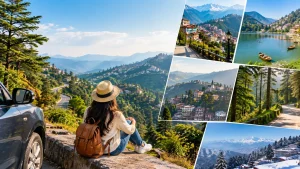
By:Acodez Web
September 9, 2026
Delhi’s summer heat can make a quick break to the mountains feel especially appealing. Mussoorie, Nainital, Kasauli and Lansdowne are among the best hill stations…
Read Post