
Best Time to Visit Jaipur: Weather, Festivals and Month-by-Month Guide
Published on : September 1, 2026
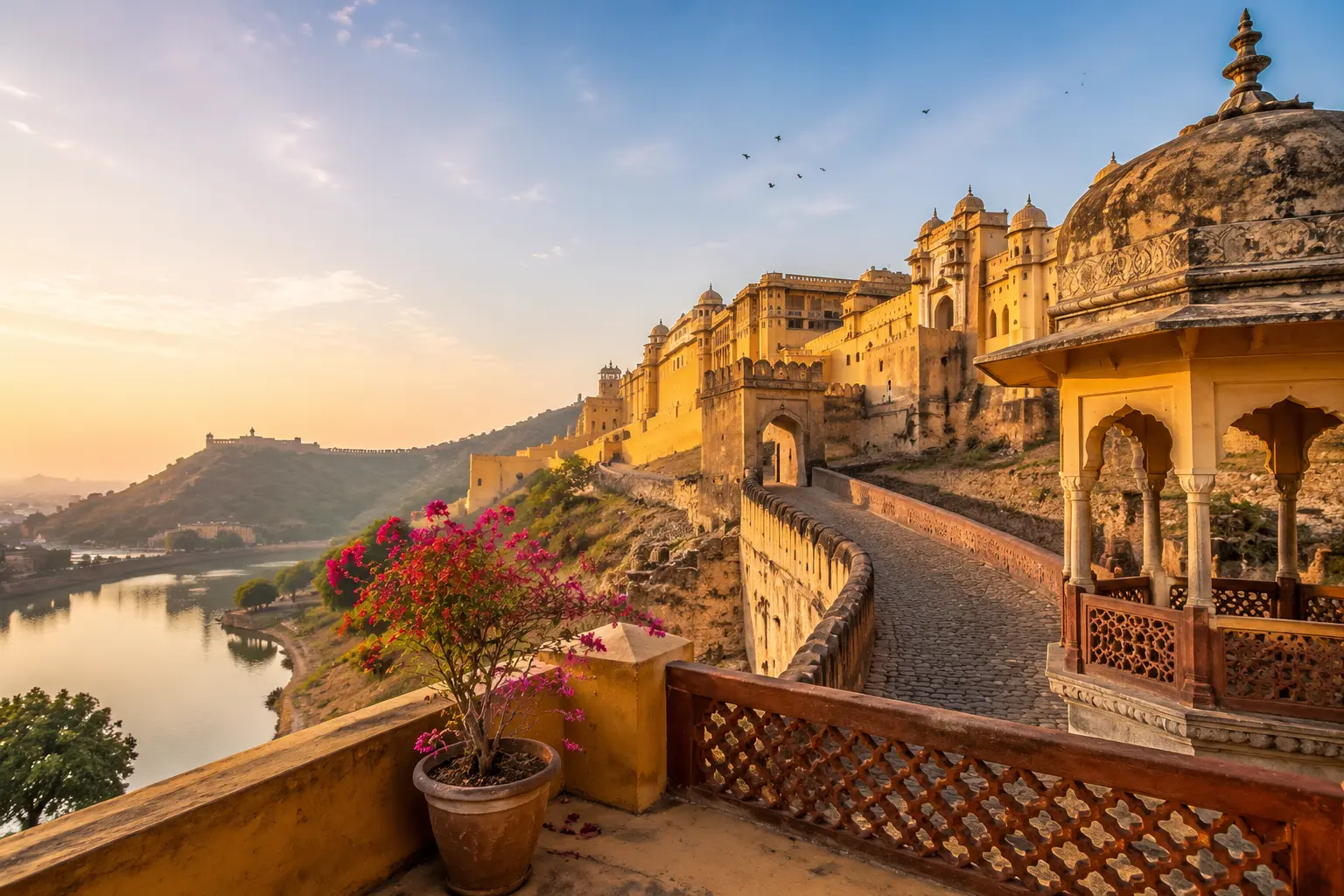
Jaipur can feel very different depending on when you visit. In winter, mornings can be cool enough for a jacket, while afternoons are comfortable for walking around forts and markets. By May, the same streets can become extremely hot by midday. The monsoon brings a different change. Rain can make the city quieter and the surrounding landscape greener.
The best time to visit Jaipur is generally October through March. The weather is comfortable for exploring the city’s forts, palaces, and markets. October and November are good choices for fewer crowds, while December through February is the peak travel season.
This guide looks at Jaipur season by season and month by month. It also covers the best time for sightseeing, major festivals, the recent summer heat, what to pack, and how to plan Jaipur as part of a wider Golden Triangle route.
Before choosing a month, it helps to understand the three main seasons.
| Season | Months | What to expect | Best for |
| Winter | October to March | Cool mornings and comfortable afternoons | Sightseeing and first-time visits |
| Summer | April to June | Very hot and mostly dry | Lower crowds and hotel rates |
| Monsoon | July to September | Rain, humidity, and greener surroundings | Quieter trips and cultural experiences |
The biggest difference is the heat. Winter is the easiest season for long sightseeing days. Summer requires more planning around midday. The monsoon is usually manageable, but rain can affect outdoor plans.
For most first-time visitors, October, November, February, and early March offer a good balance of weather and crowds.
December and January are also excellent for sightseeing. They are busier. Hotels can be more expensive around Christmas and New Year, and major attractions can become crowded during the middle of the day.
For the most comfortable weather, choose the winter months. For fewer tourists, consider October, November, or late February.
If you want to experience a major festival, your dates may be more important than the weather.
Jaipur has always had hot summers. Recent temperatures make the season even more serious.
In May 2026, Jaipur reached 45.4°C (113.7°F). It was the city’s hottest day of that summer. The heatwave also pushed the minimum temperature to 32.8°C, making the nights unusually warm.
The wider picture is also worth noting.
According to the India Meteorological Department, 2025 was India’s eighth-warmest year since nationwide records began in 1901. The country’s annual mean land surface temperature was 0.28°C above the 1991-2020 average.
That doesn’t mean every summer will be hotter than the last. Weather can vary from year to year. But if you are planning a Jaipur trip in May or June, extreme heat should factor into your decision.
If you do travel during summer, start sightseeing early. Keep the hottest part of the afternoon for lunch, shopping, or time at your hotel.
October is one of the best months to visit Jaipur. The summer heat has eased, and the monsoon is usually ending. Days become much more comfortable for visiting forts, palaces, and markets.
Afternoons can still feel warm. The difference is that the extreme summer heat is usually gone.
October is also a good choice if you want to avoid the busiest winter period.
If Diwali falls in October, the city becomes even more festive. Hotels and popular experiences can see higher demand around the festival.
November is another excellent month for Jaipur. The days are usually warm without being too hot. Mornings and evenings are cooler. This makes it easier to spend a full day moving between forts, palaces, and the old city.
It is also a good month for a Golden Triangle trip because Delhi and Agra are also comfortable during this period.
Diwali often falls in October or November. Jaipur can look particularly beautiful during the festival, with homes, markets, and historic buildings decorated with lights.
December brings some of Jaipur’s best sightseeing weather. Days are generally comfortable and dry. Mornings and evenings can feel cold, especially if you visit Amber Fort early or stay out after sunset.
The trade-off is demand. December falls within Jaipur’s main tourist season. Christmas and New Year can make hotels and popular experiences especially busy. If you want to visit during the holidays, book early.
January is one of Jaipur’s most popular months. The afternoons are usually pleasant for sightseeing. Early mornings can be surprisingly cold, so pack layers rather than relying only on warm-weather clothing.
Jaipur also hosts major winter events. The Jaipur Literature Festival is usually held around January or February and brings writers, readers, and travelers from around the world.
If the festival is part of your trip, reserve your hotel well ahead of time.
February is an easy month to recommend. The weather remains comfortable, but the coldest winter mornings are usually behind you. Days are warm enough for long sightseeing trips without the intense summer heat.
The month can also be a little less crowded than December and January. For a first-time visitor who wants good weather and a manageable pace, February is one of the strongest choices.
March marks the transition toward summer. The first part of the month can still be comfortable. Temperatures rise as the month progresses, especially in the afternoon.
Holi often falls in March. Jaipur becomes much more colorful during the festival, with celebrations involving colored powder, music, and traditional food. If you want to experience Holi, check the exact festival dates before booking. Your sightseeing plans may need to be more flexible during the celebrations.
April is when Jaipur starts to feel genuinely hot. The mornings can still be pleasant. Afternoons are another story. Long walks through forts and open courtyards can become tiring once temperatures rise.
This is a good month to change your sightseeing rhythm. Visit major attractions early. Take a long lunch break during the hottest part of the day. Then return to the city later in the afternoon.
Hotel demand is usually lower than during winter, which can make April attractive for travelers who are comfortable with heat.
May is usually the most difficult month for sightseeing in Jaipur. Temperatures can rise above 40°C and severe heatwave conditions are possible. In May 2026, Jaipur reached 45.4°C during its hottest spell of the season.
This is not the month I would recommend for a first-time traveler who wants to spend long days outdoors. If you do visit, start early. Amber Fort and other open-air attractions are much easier to enjoy before the heat becomes intense.
The upside is lower demand. Hotels and attractions can be noticeably quieter than during peak season.
June remains very hot, although conditions can begin to change as the monsoon approaches.
Outdoor sightseeing is still best done early in the morning or later in the afternoon.
The city is generally quieter than during winter. If you are comfortable with the heat, this can be a useful period for travelers looking for lower demand. For most visitors, however, October through March remains the better choice.
July is when the monsoon starts to settle in. You can expect some rain during the month, with a mix of light showers and heavier spells. The weather is cooler than May and June, but the humidity is higher.
Jaipur is usually quieter at this time of year. The rain can also bring some freshness to the city and the surrounding landscape. You can still enjoy Jaipur in July. Just keep your plans flexible and carry a light rain jacket or umbrella.
August is still part of the monsoon season in Jaipur. You can expect rain, but it does not usually rain all day. You may get a few light showers or a heavier spell of rain.
Teej is also celebrated around this time. You can see women in traditional clothes, decorated swings, music, and local processions. If you enjoy festivals and local culture, August can be a nice time to experience a different side of Jaipur.
September bridges the monsoon and the main travel season. Rain generally becomes less frequent as the month progresses. Temperatures can still be warm, but the worst summer heat is over.
This can be a good month for travelers who want fewer crowds and don’t mind some weather uncertainty. By late September, Jaipur begins to move toward the more comfortable autumn season.
No single month suits every traveler. Your ideal travel window depends on what you want to do.
| If you want… | Best time |
| Comfortable sightseeing | October to March |
| Best overall balance | October, November and February |
| Cool winter weather | December and January |
| Holi celebrations | March |
| Teej celebrations | July or August |
| Diwali celebrations | October or November |
| Fewer crowds | April to June or July to September |
| Lower hotel demand | Summer and monsoon |
| Long days outdoors | November to February |
| Golden Triangle trip | October to March |
Yes. I would promote the two service pages naturally in these sections without making the copy sound sales-heavy. Since Bespoke India Holidays is positioned as a premium travel company, I would focus on tailor-made planning, carefully paced itineraries, and Rajasthan expertise rather than mentioning budget or generic tour language.
Jaipur is often one part of the Golden Triangle, alongside Delhi and Agra. If you are also exploring Rajasthan, then you can easily combine the city with places such as Jodhpur, Udaipur, or Ranthambore.
October through March is a good time for a longer Rajasthan trip. The weather is more comfortable, so you can enjoy sightseeing and travel between different places more easily.
The key is to avoid trying to fit too much into one trip. Give yourself enough time in Jaipur to enjoy the forts, palaces, markets, and old city before moving on to your next destination.
For a more personalized route, explore Bespoke India Holidays’ Rajasthan tour packages. We can shape these around your preferred destinations, travel pace, and experiences.
You can also browse our itineraries for ideas on how Jaipur can fit into a longer India journey.
Your packing list should change with the season. Jaipur can be cool in winter mornings and extremely hot in summer.
If Jaipur is part of a longer Rajasthan or India journey, it is also worth planning your packing around the other regions you will visit. The weather can vary significantly between the plains, desert areas, and hill destinations.
2-3 full days is enough to explore Jaipur’s main forts, palaces, old city and a few markets or lesser-known places without rushing.
Yes. Jaipur is one of the three main stops on the Golden Triangle, along with Delhi and Agra. October through March is normally the most comfortable time to visit all three cities.
Jaipur can become extremely hot from April through June. Temperatures can rise above 40°C , with May usually being the hottest month. Jaipur reached 45.4°C (113.7°F) in May 2026.
Yes, July through September can be a good time to visit if you want fewer crowds and greener surroundings.
Wear light and comfortable clothing for most of the year. Bring a light jacket for winter mornings and evenings. When visiting temples and other religious sites, choose clothing that covers your shoulders and knees.
October through March is the best time to visit Jaipur for comfortable weather and sightseeing. October, November, and February are especially good if you want pleasant weather with fewer crowds.
Our travel experts are here to help you craft the perfect itinerary — stress-free and tailored just for you.
Contact Our Travel Experts
Jaipur is one of those cities that can feel like a lot on your first visit. There are forts on…
Planning a luxury honeymoon tour in India is complete with choosing the perfect destination, mode of transportation, and personalised arrangements…

Traveling India in monsoon is one of the best experiences. You will see less people at every destination which will…
By:Acodez Web
October 8, 2026
Most travelers planning their first private India holiday eventually arrive at a number and then wonder what it actually buys. A $15,000 land budget for…
Read Post
By:Bespoke admin
April 28, 2010
White water rafting is not for the chicken-hearted. If that sounds like a let down for some, the good news is, we can have a…
Read Post