
Best Places to Visit in Jaipur: Forts, Palaces & Hidden Gems
Published on : September 1, 2026
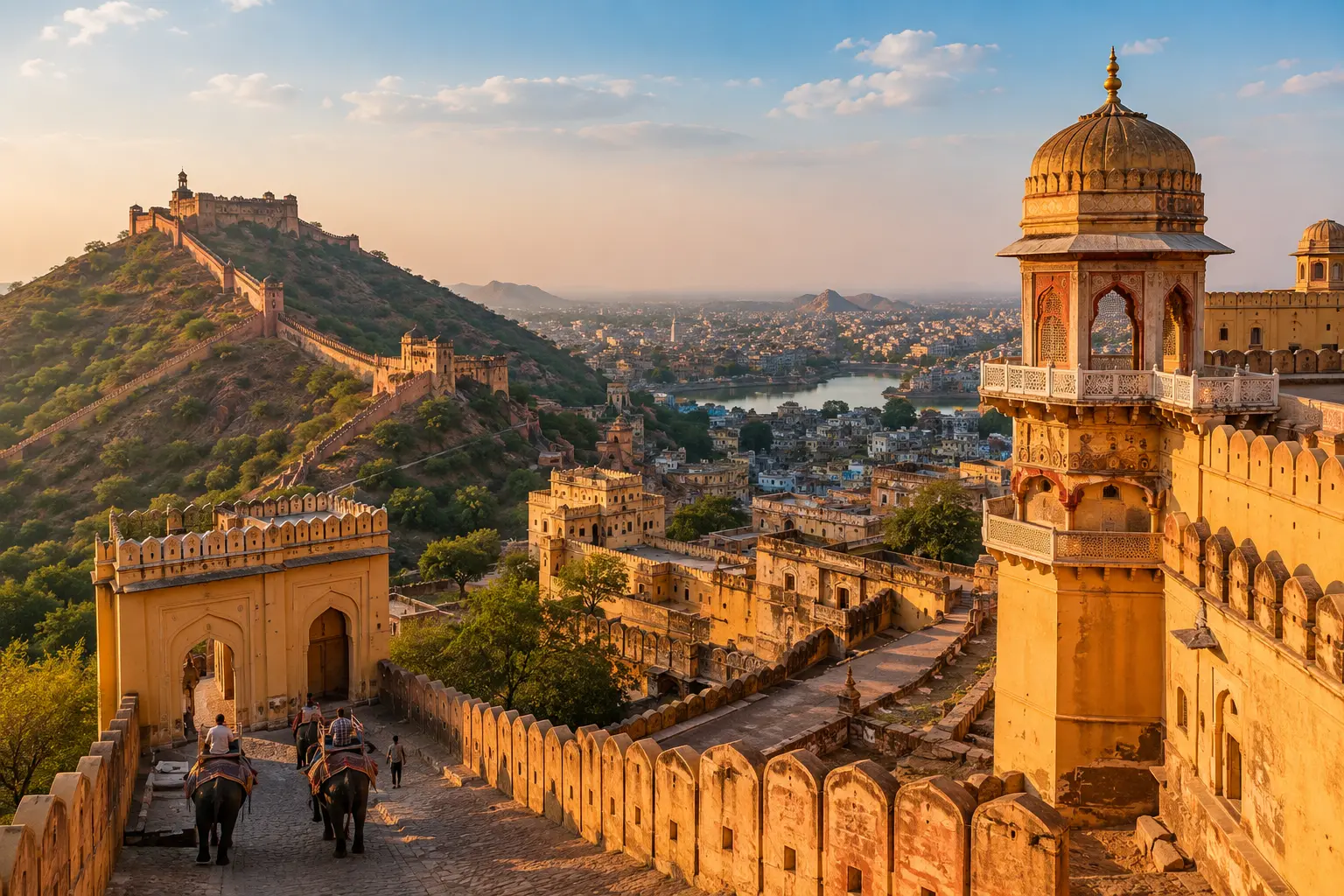
Jaipur was founded in 1727 by Maharaja Sawai Jai Singh II. He planned the city with wide streets, organized markets, and separate areas for different trades. Much of this layout remains visible in the old city today. The city’s history is easy to see as you explore. Forts stand on the hills while palaces, temples, and busy markets fill the streets below. Alongside the famous landmarks, Jaipur also has quieter places such as old stepwells, royal gardens, and historic temples.
This guide covers the best places to visit in Jaipur through experience. It starts with the major forts and palaces. Then it moves through the old city, hidden gems, and museums. It also includes a simple itinerary to help you plan your time.
Many of these places also fit into the Golden Triangle route connecting Delhi, Agra, and Jaipur. Planning your route in advance can help you see more of Jaipur without spending too much time on the road.
You do not need to visit every place on this list. Some are essential for a first visit, while others suit travelers with extra time or an interest in quieter historical sites.
| Place | Best for | Suggested time |
| Amber Fort | History and architecture | 3 to 4 hours |
| Nahargarh Fort | City views and sunset | 1 to 2 hours |
| Jaigarh Fort | Military history and views | 1.5 to 2 hours |
| City Palace | Royal history | 2 to 3 hours |
| Hawa Mahal | Architecture and photography | 45 to 60 minutes |
| Jal Mahal | Photography and sunrise | 30 to 45 minutes |
| Panna Meena ka Kund | Stepwell architecture | 30 to 45 minutes |
| Sisodia Rani ka Bagh | Gardens and quiet sightseeing | 45 to 60 minutes |
| Galtaji | Temples and local culture | 1 to 2 hours |
| Gaitor Ki Chhatriyan | Royal architecture | 45 to 60 minutes |
| Patrika Gate | Photography | 30 to 45 minutes |
| Albert Hall Museum | Art and history | 1.5 to 2 hours |
| Anokhi Museum | Textiles and crafts | 1 to 1.5 hours |
The forts are the best place to begin if you want to understand Jaipur’s royal and military history. Amber, Jaigarh, and Nahargarh sit around the city and the Aravalli Hills. Each one served a different purpose.
Amber Fort, also known as Amer Fort, predates Jaipur itself. The Kachwaha Rajput rulers developed it from the 16th century onward. It served as their capital before Jaipur was founded.
The fort combines red sandstone and marble with large courtyards, ornate halls, and detailed decorative work.
One of its most famous interiors is the Sheesh Mahal. The mirrored hall was designed so that even a small amount of light could reflect across the many tiny mirrors covering its walls.
Amber Fort is a UNESCO World Heritage Site as part of the Hill Forts of Rajasthan. It can take three to four hours to explore properly.
If you want more historical context during your visit, a private architectural and heritage walking tour can add useful background to the fort and the wider old city.
Nahargarh Fort sits high on the Aravalli ridge above Jaipur. Maharaja Sawai Jai Singh II built the fort in 1734. Its name is often translated as “abode of tigers.” It formed part of Jaipur’s wider defensive system along with Amber and Jaigarh.
The fort itself is worth seeing, especially the rooms built for the royal queens. But most visitors come for the view.
Jaipur spreads out below the ridge, making Nahargarh one of the best places to watch the city change as the sun goes down.
Jaigarh Fort sits above Amber Fort and was built mainly for defense. The two forts are connected by passages that helped provide a route between them during times of conflict. Jaigarh also housed a royal cannon foundry and armory.
Its most famous attraction is Jaivana. The huge cannon is one of the fort’s best-known features and reflects the site’s military purpose.
Jaigarh is often paired with Amber Fort because of its location. If you are already visiting Amber, adding Jaigarh can help you better understand how the two sites worked together.
The forts show Jaipur’s defensive side. The palaces show how the city’s royal family lived.
These buildings are more decorative and focus on courtyards, gardens, private rooms, and ceremonial spaces.
The City Palace was built around the time Jaipur was founded and was expanded by later rulers. The complex combines Rajput and Mughal influences. It includes courtyards, museums, ceremonial buildings, and royal residences.
The Chandra Mahal remains connected to Jaipur’s royal family. The Mubarak Mahal now houses a museum of royal clothing and textiles.
The Peacock Gate is another highlight. Its detailed decoration represents one of the four seasons, making it one of the most photographed parts of the complex.
If you want to experience Jaipur’s royal architecture beyond a daytime visit, heritage properties such as Samode Palace and Taj Rambagh Palace offer a similar sense of history as an overnight stay.
Hawa Mahal, or the Palace of Winds, is one of Jaipur’s most recognizable buildings. Maharaja Sawai Pratap Singh built the facade in 1799. It has 953 small windows that let royal women observe street activity while remaining out of public view.
The design also allows air to move through the latticework. This helped keep the building cooler during Jaipur’s hot months.
Most visitors see Hawa Mahal from the street. It is worth spending a little more time here and seeing the building from a nearby rooftop as well.
Jal Mahal sits in the middle of Man Sagar Lake. The palace began as a royal hunting lodge in the 18th century and was later renovated. Only the upper level is visible above the water. The lower levels remain below the lake’s surface.
Visitors cannot normally enter the palace. The lakeside viewpoint is still worth a stop, especially around sunrise when the light falls across the water.
Jaipur’s history does not end at the forts and palaces. The old city was planned around different trades. That tradition is still visible in its markets and workshops. Walking through the old streets gives you a better sense of how Jaipur developed as a commercial and cultural center.
Johari Bazaar is known for jewelry. Bapu Bazaar is popular for textiles and leather goods. Other lanes are known for blue pottery, lac bangles, and traditional crafts.
A morning at Amber Fort followed by an afternoon in the old city creates a natural contrast between Jaipur’s royal history and its living traditions.
Once you have seen the main landmarks, it is worth going beyond the standard sightseeing route. These places are quieter and often require less time. They work well as additions to a two- or three-day Jaipur itinerary.
Panna Meena ka Kund is a historic stepwell close to Amber Fort. The 16th-century structure is known for its symmetrical stairways that descend toward the water.
It is much quieter than the famous Chand Baori near Abhaneri. Because it is close to Amber, you can easily add it to the same morning.
Sisodia Rani ka Bagh is a historic garden and palace complex about eight kilometers from central Jaipur.
Queen Sisodia built it in 1728. The gardens include terraces, fountains, and murals showing scenes from the story of Radha and Krishna. It is a good choice if you want a quieter place to slow down after visiting the busier forts and palaces.
Galtaji is a temple complex set in a narrow gorge about ten kilometers from Jaipur. The site includes temples, natural springs, and sacred pools. It is associated with the sage Galav and is also known for the large population of rhesus macaques that live around the complex.
The atmosphere differs greatly from the main palace circuit. You will see pilgrims, temples, water tanks, and local religious activity rather than large groups of sightseeing tourists.
Gaitor Ki Chhatriyan is the royal cremation site of Jaipur’s Kachwaha rulers. The complex contains ornate marble and sandstone cenotaphs known as chhatris. Many feature detailed carvings and domed roofs.
Located at the foot of the Aravalli Hills, Gaitor is usually much quieter than Jaipur’s major forts.
It is particularly worthwhile for travelers interested in architecture and royal history.
Patrika Gate is different from the other sites on this list because it is modern. It was built in 2016 near Jawahar Circle. Its pink-and-gold arches feature painted scenes inspired by Rajasthan’s history and culture.
It has become one of Jaipur’s most photographed spots, especially among visitors looking for colorful architecture.
The gate is free to visit and is accessible around the clock. Early morning is usually the easiest time for photographs.
Jaipur’s monuments explain the city’s royal history. Its museums add the details.
The Albert Hall Museum sits inside Ram Niwas Garden and is housed in an Indo-Saracenic building. Its collection includes miniature paintings, sculptures, metalwork, textiles, and other historical objects.
The Anokhi Museum of Hand Printing offers a different experience. Located in a restored haveli near Amber, it focuses on the traditional block-printing techniques that remain an important part of Jaipur’s craft culture.
Both are good options if you want a break from outdoor sightseeing.
You can see Jaipur’s main landmarks in two full days. Three days gives you more room for hidden gems, museums, markets, and slower experiences.
Start early at Amber Fort. Add Jaigarh Fort while you are in the same area. Return toward the city in the afternoon and finish the day at Nahargarh Fort for sunset.
If you have extra time in the morning, you can easily add Panna Meena ka Kund to the route.
Start with the City Palace. Continue to Hawa Mahal and then explore the surrounding old city. Give yourself time for the bazaars rather than simply passing through them.
Jal Mahal can work as a short stop either early in the morning or later in the day.
Use the third day for places that are outside the main tourist circuit. You could visit Sisodia Rani ka Bagh, Galtaji, or Gaitor Ki Chhatriyan. Add the Albert Hall Museum or Anokhi Museum if you want more time indoors.
You do not need to visit every site. Pick two or three that match your interests and leave enough time to enjoy them.
The most comfortable time for sightseeing is generally October through March. October and November offer pleasant daytime weather and can be a good choice if you want to avoid the coldest winter nights.
December through February is the main winter travel period. Days are generally comfortable for sightseeing, but mornings and evenings can feel cold.
April through June is much hotter. Temperatures can become uncomfortable during the middle of the day, so early morning and late afternoon are better for outdoor sightseeing.
The monsoon arrives during the summer months and can bring periods of rain. Jaipur generally receives less rainfall than many other parts of India, but showers can still affect outdoor plans.
If your trip is focused on forts and walking tours, the cooler months are the easiest choice.
Amber Fort is the strongest choice if you only have time for one major attraction. It combines royal history, architecture, and the hill landscape that helped shape Jaipur.
If you have time for a second stop, visit Hawa Mahal and City Palace in the old city.
No. They are separate forts located close to each other.
Amber Fort was primarily a royal residence and palace complex. Jaigarh had a stronger military role and is known for its fortifications, armory, and Jaivana cannon.
Amber Fort is part of the Hill Forts of Rajasthan UNESCO World Heritage listing. Jaipur’s historic walled city has a separate UNESCO World Heritage designation based partly on its planned urban layout and architecture.
No. Chand Baori is in Abhaneri, around 95 kilometers from Jaipur.
It is often included as a stop between Jaipur and Agra on a wider Golden Triangle itinerary.
Panna Meena ka Kund, Sisodia Rani ka Bagh, and Gaitor Ki Chhatriyan are good choices if you want quieter historical sites. Galtaji is another option if you are interested in temples and local religious traditions.
You can buy individual tickets at the major attractions. Composite tickets may also be available for several monuments. If you plan to visit multiple major sites, check the current ticket options before your sightseeing day.
Our travel experts are here to help you craft the perfect itinerary — stress-free and tailored just for you.
Contact Our Travel Experts
India is one of the richest biodiversity regions in the world, home to over 100 national parks, 52 tiger reserves,…
The most popular tourist circuit in India, the Golden Triangle includes the three world famous cities – Delhi, Agra and…
Some places make you slow down the moment you arrive. Munnar is one of them. Set high in Kerala’s Western…
By:Bespoke admin
July 7, 2025
The most luxurious Indian tour operator focuses on a convenient system of logistics, the versatility of the culture, and personalisation. All our tours are well-planned…
Read Post
By:Bespoke admin
September 5, 2014
India is home to some of the top luxury hotels in the world, offering memorable holidays, beautiful honeymoons, and amazing family trips across its culturally…
Read Post
By:Bespoke admin
March 10, 2010
Malaysia, Singapore and Dubai have always remained most preferred destinations for health tourism but from a few years India has become one of the favorites…
Read Post