Best Time to Visit Delhi in 2026: When to Go for Weather & Festivals
Published on : September 9, 2026
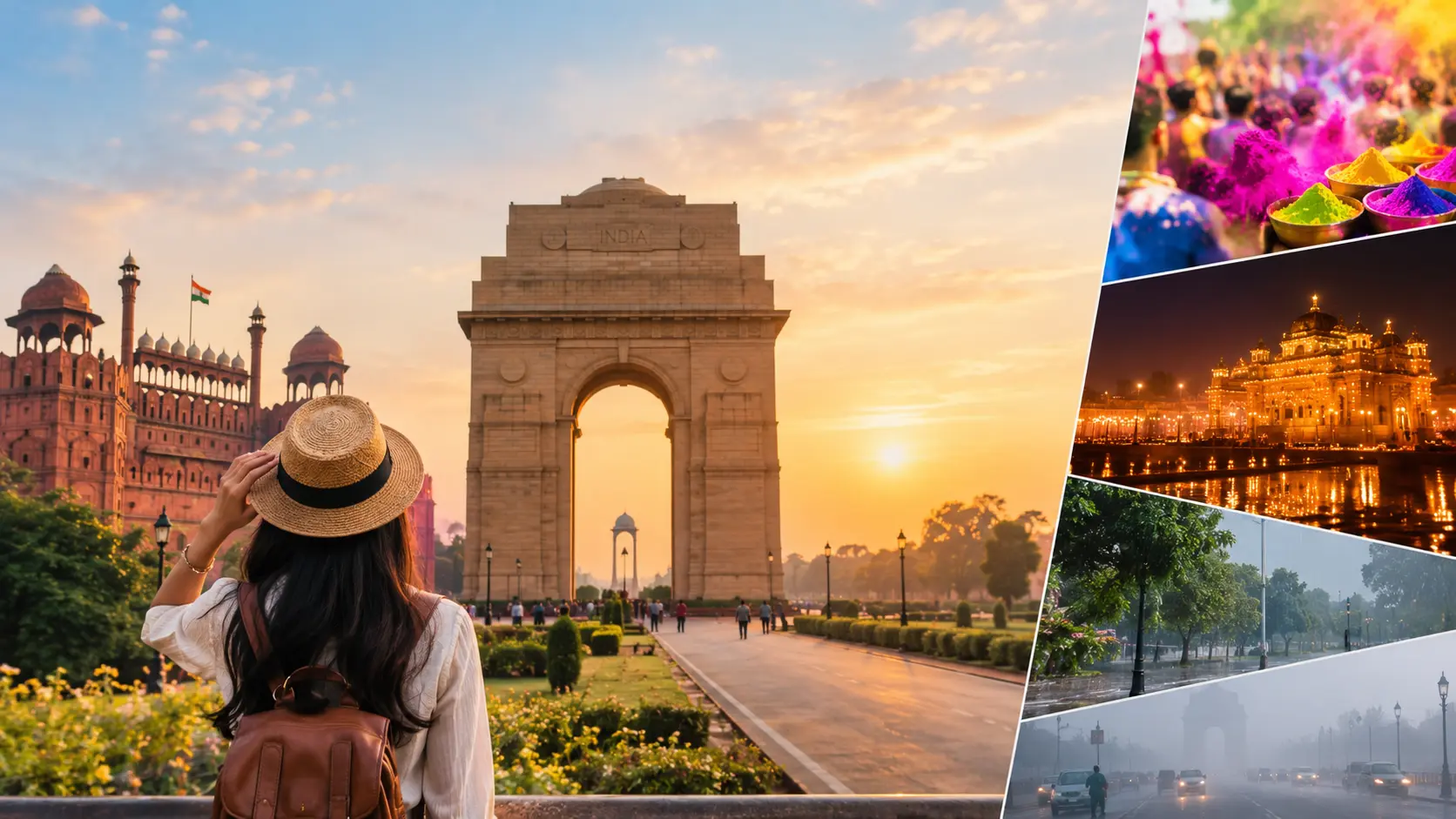
Delhi weather can make a world of difference in your enjoyment of the city. Winter is a nice time to travel. Mornings are cool and days warm. Summer can make it hard to enjoy outdoor sightseeing. The monsoon gives rain and humidity, but the city is also a hive of festivals and cultural events all year round.
That is why there is no single best time to visit Delhi for everyone.
For most travelers, October to March offers the most comfortable conditions for exploring Delhi’s historic landmarks, markets and neighborhoods. October and November bring pleasant weather and major celebrations, while February is a particularly good month for sightseeing. The hotter months can still work if you plan around the heat and choose luxury India tours with a comfortable pace.
Delhi recorded 46.26 million domestic tourist visits and 1.999 million foreign tourist visits in 2024, according to government tourism data.
So when should you go? It depends on the weather, festivals, and experiences you want from your Delhi trip.
October to March is the best time to visit Delhi for comfortable sightseeing. October and November offer mild weather, while December to February brings cooler temperatures and busy tourist periods.
October and November are good months for exploring Delhi’s forts, tombs, markets and neighborhoods. They also coincide with several major festivals. If you’re planning a Golden Triangle tour that includes Delhi, Agra and Jaipur, this period offers comfortable conditions for exploring all three destinations.
December and January bring colder mornings and occasional fog. They are also among Delhi’s busiest travel months, particularly around Christmas and New Year. February is a quieter alternative, with mild weather and good conditions for sightseeing.
March marks the start of warmer weather. It can still be a good month to visit, especially if you plan outdoor activities earlier in the day.
Winter, from October to March, is the best season to visit Delhi. The cooler weather makes it more convenient to spend time outdoors, while summer heat and monsoon humidity can make sightseeing less comfortable. For a broader look at seasonal conditions across India, see the guide to India weather. Following are details of Delhi weather by month:
October and November bring mild days and cooler evenings. These months are considered pleasant for visiting Delhi’s forts, tombs, markets, and ancient neighborhoods. They also align with major Indian festivals like Diwali, so if you’re planning to go during this period. It will be a memorable experience for you in this period. December and January are colder in the mornings. Fog can reduce visibility and affect travel on some days. February brings milder temperatures and remains a good month for sightseeing.
Delhi becomes extremely hot beginning in April. May and June are the most difficult months for outdoor sightseeing due to high daytime temperatures. If you’re traveling during the summer, schedule your outdoor activities in the early morning or late afternoon. If you want to avoid the heat and visit indoor attractions, make your reservations for midday.
July to September is mostly humidity and rain. So if you visit Delhi during this monsoon season, you might see a lot of rain disrupting your sightseeing plans. September is still much better as rainfall decreases during this time, and it may appeal to tourists who prefer fewer crowds and occasional rainfall.
If you want to combine sightseeing with local experiences, the cooler months are also a good time to explore Delhi’s heritage walks, including Mehrauli Archaeological Park and Hauz Khas.
The major festivals in Delhi include Republic Day, Holi, Independence Day and Diwali. Each falls in a different part of the year and can add a strong cultural element to a Delhi trip. Here’s when these festivals take place and what you can expect.
Republic Day is celebrated on 26th January. The main parade on this day takes place at Kartavya Path. The event attracts large crowds and there may be security checks and road closures in central Delhi.
Holi, the festival of spring, is celebrated with colors, music and parties. The date changes each year according to the Hindu calendar. If you want to experience Holi, check the top Indian festival date before planning your trip.
India celebrates 15th August as Independence Day. The main national ceremony takes place at the Red Fort. The security arrangements and traffic restrictions on this day may affect parts of Old Delhi.
Diwali, the Festival of Lights, is one of India’s biggest celebrations. Homes, shops and streets are decorated with lamps and lights, and families come together for prayers and celebrations. The date changes each year, usually falling in October or November.
Delhi also celebrates Eid, Dussehra, Durga Puja and Christmas, among other religious and cultural events. Dates vary each year, so check the local calendar when planning around specific festivals in New Delhi.
October to March is the best time for most Delhi travel experiences. The ideal month can vary if you are visiting for a festival, food, shopping or a specific cultural event. Here’s when to plan your trip based on what you want to experience.
Pack according to the season and plan around Delhi’s weather. Winters can be cold and foggy, while May and June bring the year’s most difficult conditions for outdoor sightseeing. Here are a few things to keep in mind before you go.
Three days is a good starting point for a first Delhi trip. Delhi Tourism has dedicated one-, two- and three-day itineraries, with longer stays allowing time for more attractions and excursions outside the city.
Yes, two days are enough to see many of Delhi’s main attractions. You can divide your time between Old Delhi and central or South Delhi. Delhi Tourism also provides a two-day itinerary covering major historical sites and local experiences.
Wear light, breathable clothing in warmer months and carry layers in winter. Comfortable walking shoes are useful because many sightseeing days involve time outdoors. Dress modestly when visiting religious sites.
Yes, Delhi offers enough variety for a family trip. Families can combine monuments, museums, gardens, markets and food experiences, then adjust the pace around children’s needs.
Yes, Delhi works well as a starting point for a longer North India itinerary. If you have more than a few days, you can add destinations such as Agra, Jaipur, Bharatpur, Shimla or Kasauli. Delhi Tourism also lists several excursions and multi-day circuits from the city.
Our travel experts are here to help you craft the perfect itinerary — stress-free and tailored just for you.
Contact Our Travel Experts
Most travelers planning their first private India holiday eventually arrive at a number and then wonder what it actually buys.…

The remarkable diversity of India presents visitors with distinct seasonal landmarks, including the Himalayan mountains, Goan beaches, and the backwaters…
Trekking in the Markha Valley A walk in the skies. Trekking in Ladakh Markha Valley takes you high over the…
By:Bespoke admin
November 23, 2020
The pioneer of organic farming in Sikkim Mr. Pawan Chamling (Former Chief Minister of Sikkim), highlights the importance of organic farming in his…
Read Post
By:Acodez Web
September 4, 2026
Delhi doesn’t ease first-time visitors. One afternoon you’re staring up at the city’s tallest flex, and an hour later you’re elbow-deep in a plate of…
Read Post