
Best Things to Do in Kochi for First-Time Visitors
Published on : September 29, 2026
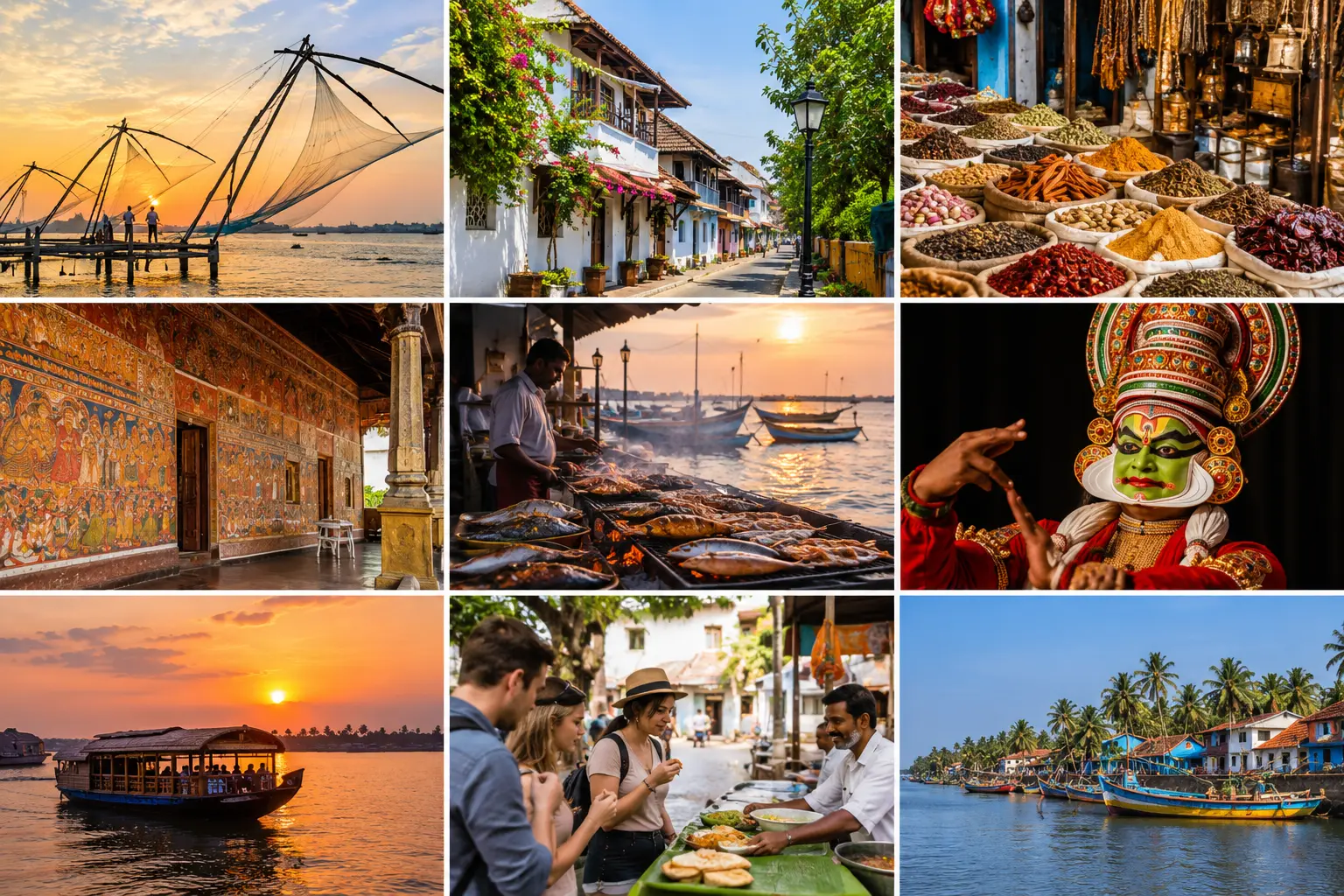
Six centuries of traders have passed through Kochi, and almost all of them left something behind. The Portuguese built the first European church in India here in 1506. The Chinese introduced their giant cantilevered fishing nets in the 1400s, and fishing families still use them every morning. Jewish spice merchants settled in Mattancherry in the 16th century and built a synagogue that still holds services. The Dutch renovated a palace and gave it their name. The British added their own layer on top. The result is a compact peninsula where all of that history sits cheek by jowl, available to walk through in a single day. Kochi is not just a place to see. It is a place where you actually do things, taste things, learn things, and come away with a genuine sense of a city that has always been more international than most.
For US travelers beginning a luxury Kerala tour, Kochi is almost always the right starting point. It connects directly to the rest of the state and rewards the kind of unhurried, experience-led travel that Kerala does better than almost anywhere else in India. The best things to do in Kochi are spread across two neighborhoods, Fort Kochi and Mattancherry, and the two sit close enough together to cover in a full day on foot.
This guide is structured around what you actually do rather than what you simply pass by. Each entry covers the activity itself, when to do it, what to expect, and how long to allow. Whether you have one day or two, the sections below give you a clear, practical plan for your first visit.
One advance note: the Kochi-Muziris Biennale, Asia’s largest contemporary art festival, runs from December through March in alternate years. In a Biennale year, Fort Kochi’s warehouses, streets, and public spaces are transformed into exhibition venues. It is worth confirming dates before you arrive, as it significantly changes how the neighborhood feels and what is happening in it.
| Activity | Neighborhood | Best Time | Time Needed |
| Watch the Chinese fishing nets in action | Fort Kochi waterfront | Before 08:00 a.m. or late afternoon | 30 to 45 mins |
| Take a private heritage walking tour | Fort Kochi lanes | Morning, before 11:00 a.m. | 2 to 3 hours |
| Walk through Jew Town spice market | Mattancherry | Late morning | 1 to 1.5 hours |
| Visit Mattancherry Palace murals | Mattancherry | Morning; closed Fridays | 1 to 1.5 hours |
| Buy fresh catch and have it grilled on the spot | Fort Kochi waterfront | Late afternoon | 45 mins to 1 hour |
| Watch Kathakali makeup and performance | Kerala Kathakali Centre | Evening, from 05:30 p.m. | 2 hours |
| Take a private sunset backwater cruise | Kochi harbour | From 05:00 p.m. | 60 to 90 mins |
| Explore a Kerala food tour on foot | Fort Kochi and Mattancherry | Evening | 2 to 3 hours |
| Visit Kumbalanghi fishing village | Outside central Kochi | Morning | Half day |
The most immediately distinctive of the things to do in Kochi requires nothing more than an early morning and a walk to the northeastern tip of Fort Kochi. The Chinese fishing nets, called cheena vala locally, are large cantilevered structures operated by counterweight. A team of fishermen works each net together, lowering the net into the harbor and lifting it back up in a slow, practiced rhythm. The catch at any given moment might be squid, prawns, or small fish. The whole operation is working life, not performance, and that is exactly what makes it worth seeing early before the crowds arrive.
Before 08:00 a.m. is the right time. The light comes in low across the water, the harbor is quiet, and the fishermen are most active. By 10:00 a.m., the area fills with other visitors and the atmosphere changes completely. The waterfront also has street food vendors selling coconut water and grilled seafood from late afternoon onward. If you want to come back at sunset, the silhouette of the nets against an orange sky over the harbor is one of the most photographed views in all of Kerala, and for good reason.
Walking Fort Kochi with a knowledgeable local guide is one of the most rewarding best things to do in Kochi for first-time visitors. The streets look colonial at first glance, and they are, but the history is considerably more layered than the architecture suggests. Portuguese churches sit near Dutch bungalows. British warehouses share lanes with traditional Kerala homes. The architectural walking tour moves through these streets and connects the buildings to the merchants, rulers, and traders who built them. Without that context, you are looking at interesting old structures. With it, you understand that Fort Kochi was essentially a contested prize, passed between European powers over two centuries while Kerala’s own culture continued alongside and underneath it all.
Princess Street and Burgher Street are the spine of the walk. You pass St. Francis Church, built in 1506 and the first European church in India, where Vasco da Gama was buried for fourteen years before his remains were moved to Portugal. You pass the Santa Cruz Cathedral Basilica, with its ornate Portuguese interior. You pass art galleries, spice warehouses, and colonial bungalows that have been turned into heritage hotels and cafes. The walk works best before 11:00 a.m. when the heat is manageable and the lanes are still relatively quiet.
About 2 km from Fort Kochi, Mattancherry’s Jew Town is among the most specific things to see in Kochi that you will not find replicated elsewhere in India. The street is narrow and lined with antique dealers, spice wholesalers, and textile traders. Bulk sacks of pepper, cardamom, turmeric, cinnamon, and cloves are stacked in open doorways. The smell alone tells you something different is happening here. Kerala was the center of the global spice trade for centuries, and Mattancherry was the neighborhood where that trade happened. Walking through it still feels that way.
At the end of the street, the Paradesi Synagogue, built in 1568, is one of the oldest functioning synagogues in the world. Its interior holds hand-painted Chinese floor tiles, each individually different, a gold pulpit, and Belgian chandeliers. It is open from 10:00 a.m. to 12:00 p.m. and 03:00 p.m. to 05:00 p.m., and closed on Fridays and Saturdays. Even if you do not enter, the street itself and the antique shops that line it are worth at least an hour of slow exploration.
The Mattancherry Palace is one of the most underrated what to do in Kochi experiences on the list. The Portuguese built it in 1555 as a gift to the Raja of Kochi. The Dutch renovated it in 1663 and gave it its other name: the Dutch Palace. What matters most inside is the mural cycle covering the walls of the royal bedrooms and coronation hall. These Kerala-style paintings depict scenes from the Ramayana, Mahabharata, and the Puranas in a style that has no equivalent in the rest of India. The detail is extraordinary. Each wall tells a continuous narrative that requires time to follow.
Photography is not permitted inside. That restriction is actually a reason to slow down and look properly, rather than cataloguing the walls through a screen. The palace opens at 10:00 a.m. and closes at 05:00 p.m. It is closed on Fridays. Spend at least an hour here. Entry costs less than $1 per person. It is one of the most culturally significant stops among all the things to see in Kochi and one of the least crowded.
One of the most genuinely fun things to do in Kochi also happens to be one of the simplest. In the late afternoon, the Fort Kochi waterfront near the fishing nets turns into an informal market. The fishermen sell their catch directly to visitors by weight: squid, prawns, pomfret, and whatever the nets brought up that day. A row of small grilling stalls nearby will cook your fish immediately, seasoned with local spices, for a small preparation fee. You eat at a table by the water, watching container ships cross the harbor as the sun drops.
This is not a restaurant experience. It is a genuinely local one, and it is the kind of specific, unscripted moment that travelers carry with them long after the palace murals have blurred together. Go around 05:00 p.m. to catch the market at its liveliest and to time the meal with the best light over the harbor.
Attending a Kathakali performance is one of the standout fun things to do in Kochi for first-time visitors to Kerala, but arriving just for the show misses much of what makes it worth attending. The Kathakali show at the Kerala Kathakali Centre typically begins with a demonstration of the makeup application process from around 05:30 p.m. Program details are listed on the centre’s official website. Kathakali face painting is a codified system. Each color combination signals a specific character type: green for heroic characters, red and black for villains, white for sages and the divine. Watching a performer sit patiently as their face is transformed over 45 minutes is an experience entirely separate from the performance that follows.
The performance itself runs for around 60 to 90 minutes and draws on stories from the Mahabharata and Ramayana. The same center stages Kalaripayattu demonstrations, Kerala’s ancient martial art form, on most evenings before the Kathakali show. Going to both in sequence is the most complete way to spend an evening. Tickets cost roughly $10 to $15 per person for the performance.
Among the most relaxed what to see in Kochi experiences is one you watch from the water. A private boat on the harbor at sunset shows you the Chinese fishing nets from the sea side, the container terminal working at dusk, and the Fort Kochi peninsula receding as the light changes. It is quiet, unhurried, and gives you a perspective on the city that no street-level walk can replicate.
A private harbor cruise runs for 60 to 90 minutes and costs between $50 and $120 depending on the vessel. The backwater village cruise is the more immersive option for travelers who want to understand how Kochi’s canals and communities work beyond the tourist neighborhoods. It passes coir-making workshops, traditional homes, and village fish markets. This is a natural fit for a Kerala honeymoon itinerary or any trip where the pace matters as much as the sights.
If you have two days in Kochi, the Kumbalanghi Village tour is one of the most grounding best things to do in Kochi outside the Fort Kochi heritage circuit. Kumbalanghi is India’s first eco-tourism village, about 14 km from the city center. A morning here takes you through a working fishing community: you watch crab farming in the backwater channels, see traditional coir weaving in progress, and walk through paddy fields and mangroves that look nothing like the colonial architecture you spent the previous day exploring.
It gives the whole trip a different dimension. Kochi is easy to experience entirely through its Portuguese-Dutch-British history. Kumbalanghi shows you the Kerala that existed before any of those traders arrived, and that has continued quietly alongside everything since. It takes about a half day and is best done in the morning before the heat builds.
Kochi is the natural entry point for most luxury Kerala tours. Cochin International Airport connects to Delhi, Mumbai, and several international cities. From Kochi, the most common route moves to Munnar for the hill station and tea estates, then to Alleppey or Kumarakom for the backwaters, and finishes at a beach destination like Kovalam or Marari. That arc covers the full range of what makes Kerala distinctive as a destination, from colonial city to mountain hill station to backwater slow travel to the coast.
Our team at Bespoke India Holidays builds fully private Kerala routes that give Kochi its proper time without rushing toward the next stop. For travelers combining Kerala with the north, Kochi also connects well into a private luxury India tour that pairs the south with Rajasthan or the Golden Triangle for a complete picture of the country. The heritage circuit that runs from Delhi through Agra and Jaipur southward into Kerala is one of the most rewarding ways to see India on a single extended trip.
Start before 08:00 a.m. at the Chinese fishing nets, take a guided heritage walk through Fort Kochi, move to Mattancherry for the spice market and Mattancherry Palace, buy fresh fish from the waterfront vendors in the late afternoon, and finish with a Kathakali performance in the evening. That covers the core of the best things to do in Kochi in one full day.
Watching Kathakali makeup being applied before the show, buying and eating fresh fish grilled on the waterfront, and taking a private sunset harbor cruise are the three most experiential and fun things to do in Kochi that first-time visitors consistently mention as highlights.
The evenings in Kochi are active. The waterfront market runs from around 04:30 p.m. The Kathakali Centre holds makeup demonstrations from 05:30 p.m. Sunset harbor cruises typically depart from 05:00 p.m. These three together make for a full and varied evening without overlap. A Kathakali performance should be booked in advance during peak season.
Fort Kochi and Mattancherry are walkable and well-signed. That said, the historical depth of what to see in Kochi, particularly inside Mattancherry Palace and along the heritage walk, is significantly richer with a private guide. Most luxury travelers find it worth the addition.
Two days is the ideal window for things to do in Kochi. Day one covers Fort Kochi and Mattancherry. Day two adds the Kumbalanghi Village tour in the morning and a backwater cruise in the evening. One day is workable if your schedule is tight, but it requires an early start and a clear plan.
Our travel experts are here to help you craft the perfect itinerary — stress-free and tailored just for you.
Contact Our Travel Experts
US citizens need a valid visa to enter India. The fastest option is the e-tourist visa for US citizens to…
As a rule, hill stations are crammed with tourists, so where can one find his ‘peace’ in a hill haven…
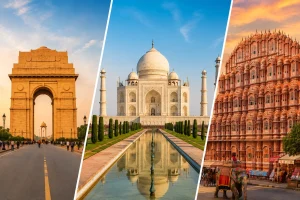
There is a reason most first-time visitors to India choose Delhi, Agra, and Jaipur. These three cities are close enough…
By:Acodez Web
September 23, 2026
January in Jaipur looks different from any other time of year. The forts are the same. The bazaars are the same. But for five days…
Read Post
By:Acodez Web
September 10, 2025
Marriage is a significant shift in a couple’s life, full of countless anticipations and possibilities in the future. To slow down after the wedding chaos…
Read Post
By:Acodez Web
September 4, 2026
Delhi doesn’t ease first-time visitors. One afternoon you’re staring up at the city’s tallest flex, and an hour later you’re elbow-deep in a plate of…
Read Post