
Best Places to Visit in Munnar: Tea Estates, Viewpoints and Waterfalls
Published on : September 29, 2026
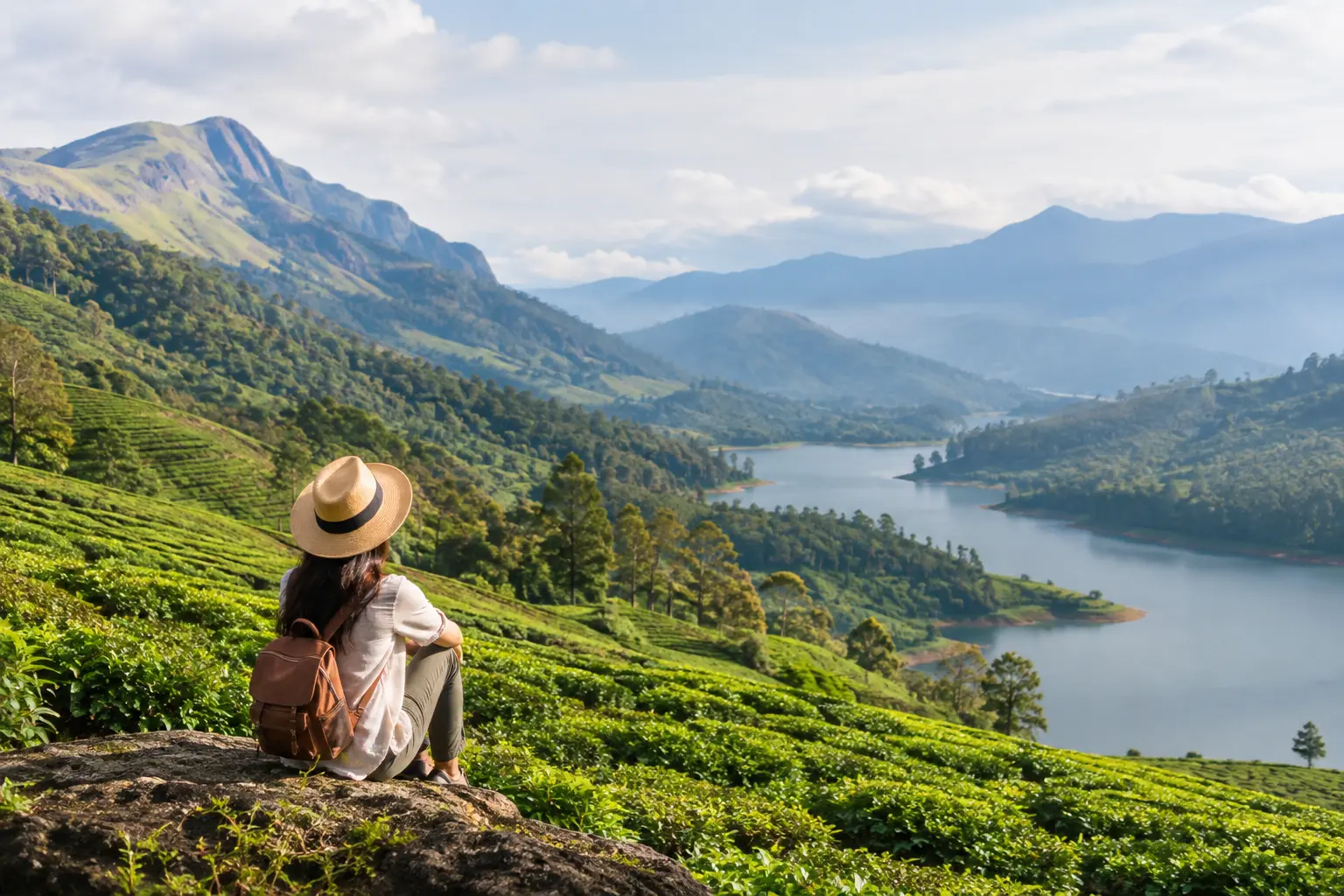
Munnar earns its reputation quietly. There are no major cities nearby. No heritage monuments to queue for. What draws visitors here is simpler and, for many travelers, far more satisfying: hillsides covered in tea, a cool climate even in summer, waterfalls that appear without warning on mountain roads, and wildlife that has no particular interest in staying hidden. At 1,600 meters above sea level, the hill station sits in Kerala’s Idukki district, about 130 km from Kochi, and it delivers a kind of slow, grounded luxury that is difficult to find in India’s more obvious destinations.
For travelers on a luxury Kerala tour, Munnar typically works best as a two to three-night stay within a wider itinerary. That is enough time to cover the major Munnar sightseeing places without rushing, and to actually spend time in your hotel rather than just sleeping there. The Munnar visiting places list below is organized by category so you can plan your days logically rather than driving back and forth across the hills.
One practical note before you go: Eravikulam National Park, one of the top Munnar tourist places, closes every year in February and March for the Nilgiri Tahr calving season. If your travel window falls in those months, confirm park status before booking. Everything else on this list remains accessible year-round, though the monsoon months of June through September can make some waterfall trails slippery and some viewpoint roads foggy for long stretches of the day.
This guide covers the most rewarding places to visit in Munnar across four categories: tea estates and museums, wildlife and national parks, viewpoints and lakes, and waterfalls. Each entry includes distances from Munnar town, practical timing notes, and honest observations about what to expect.
| Place | Category | Distance from Munnar Town | Time Needed | Best For |
| Kannan Devan Tea Museum | Tea heritage | In town (Nallathanni Estate) | 1.5 to 2 hours | Tea history, tasting, cultural insight |
| Eravikulam National Park | Wildlife | 15 km | Half day | Nilgiri Tahr sightings, Anamudi Peak views |
| Pothamedu Viewpoint | Viewpoint | 6 km | 1 to 2 hours | Tea, coffee, cardamom estate panoramas |
| Mattupetty Dam and Lake | Lake and scenery | 13 km | 1 to 2 hours | Boating, forest views, shola landscape |
| Echo Point | Natural attraction | 15 km | 45 mins to 1 hour | Natural acoustics, lake views |
| Kundala Lake | Lake | 20 km | 1 hour | Boating, cherry blossom trees (seasonal) |
| Top Station | Viewpoint | 32 km | 2 to 3 hours including drive | Western Ghats panorama, Tamil Nadu border views |
| Cheeyappara Waterfalls | Waterfall | 65 km (en route from Kochi) | 30 to 45 mins | Roadside waterfall stop on arrival day |
| Attukad Waterfalls | Waterfall | 9 km | 45 mins to 1 hour | Nature walk, off-road trail access |
If you visit only one indoor Munnar Kerala tourist place, make it the Kannan Devan Tea Museum. Located in the Nallathanni Estate, the museum is managed by Tata Tea and covers the full arc of Munnar’s tea history, from the original surveys of the Kanan Devan Hills in the 19th century through to the modern CTC manufacturing process used today. The live demonstration ends with a guided tasting session of teas processed that morning. It runs from 09:00 a.m. to 05:00 p.m. and takes around 90 minutes to cover properly.
The museum is one of the more informative heritage stops in all of Kerala, not just Munnar. The context it gives you makes every drive through the tea estates afterward feel different. You start to understand the scale of what you are looking at: over 30,000 acres of cultivated hillside, managed by one of India’s most recognized agricultural brands, in a landscape that looked entirely different less than 200 years ago. Entry costs are nominal for foreign visitors at around $6 per person.
After the museum, the Munnar cycle tour through tea plantations is a strong next step. It takes you through the working estate rows and gives you a ground-level view that no car window can replicate.
Eravikulam is the single most significant Munnar tourist place for wildlife and landscape. The park sits 15 km from Munnar town across 97 square kilometers of Western Ghats grassland and shola forest. It was established in 1978 specifically to protect the Nilgiri Tahr, an endangered mountain ungulate found only in the high-altitude ranges of South India. Today, Eravikulam holds the world’s largest surviving population of the species.
Visitors access the park through the Rajamalai tourism zone. Private vehicles are not permitted inside. Forest Department safari buses run from the entrance gate and carry visitors about 1 km into the park, where the Tahr can usually be spotted grazing on the grassland slopes. The animals are accustomed to human presence in this zone and frequently graze within a few meters of the walking paths. Anamudi Peak, at 2,695 meters the highest point in South India, forms the backdrop to the main viewing area.
The park opens at 07:30 a.m. and closes at 04:00 p.m. Entry for foreign nationals is $6 per person. The park closes entirely in February and March for the calving season. Booking tickets in advance online through the official Eravikulam National Park website is strongly recommended from October through January, when queues at the gate can run two to three hours. September through November typically offers the clearest conditions after the monsoon.
Eravikulam sits at the heart of any well-planned India wildlife tour that includes Kerala. Budget a full morning for it. The park genuinely requires more than a quick stop to appreciate the scale of the landscape and the behavior of the Tahr.
At just 6 km from Munnar town, Pothamedu is one of the most accessible Munnar sightseeing places and one of the most visually rewarding. The viewpoint sits above a rolling landscape of tea, coffee, and cardamom estates. On clear mornings, the Idukki Arch Dam is visible in the distance. The narrow road to the viewpoint passes through working estate terrain and a small village of tea estate workers, which gives the drive its own character.
It works best early in the morning, before the mist burns off and before the afternoon light flattens the estate contours. Photographers tend to return here more than once. It is a quiet stop with no significant entry fee and no crowd management required.
Mattupetty sits 13 km from Munnar at an elevation of 1,700 meters. The gravity dam was built as part of the Pallivasal Hydroelectric Project and the reservoir it created has become one of the most popular Munnar Kerala tourist places for its combination of open water, surrounding shola forest, and accessible boating. Speedboats and pedal boats are available for hire on the lake from 09:30 a.m. to 05:00 p.m.
The forest edge around the lake is prime territory for wild elephant sightings in the early morning and late afternoon. It is also the starting point for the route toward Echo Point, Kundala Lake, and Top Station, so most visitors combine several stops into a single Mattupetty direction day.
Top Station is the furthest of the major Munnar places to visit on this list at 32 km from town, but the drive itself is part of the reason to go. The road climbs through tea estates, passes Mattupetty and Kundala on the way, and reaches a ridge on the Kerala-Tamil Nadu border at 1,700 meters above sea level. The views extend over the Western Ghats on one side and the Theni district of Tamil Nadu on the other.
The name comes from the highest point of a now-defunct aerial ropeway that once transported tea down the mountain. On clear days, the panorama is genuinely wide. Cloud cover moves fast at this altitude, so arriving before 10:00 a.m. gives you the best chance of clear visibility. April and May are considered the most reliable months for cloud-free Top Station views. Neelakurinji flowers, which bloom only once every 12 years, last flowered here in 2018. The next bloom season is expected in 2030.
Most visitors see Cheeyappara on their arrival day from Kochi, as the falls sit on NH85 about 65 km before Munnar town. The waterfall drops in seven visible steps down the hillside, and the best viewing angle is near the second step from the bottom. There is no entry fee. It is a roadside stop rather than a dedicated excursion, and the 30 minutes you spend here sets the tone for what Munnar’s landscape is about to offer.
The neighboring Valara Waterfall is a few kilometers further along the same road and equally worth a brief stop on the same drive in.
Attukad sits 9 km from Munnar town on the Pallivasal road and is the more rewarding of the waterfall Munnar sightseeing places for travelers who want to walk rather than observe from the road. A short trail leads through forest to reach the falls. The path can be slippery after rain, so footwear with grip is practical. The falls are fed directly by the surrounding hills and run strongest from late September through December. Early morning visits are quieter and the forest light is at its best before 09:00 a.m.
The most practical way to cover the main Munnar Kerala tourist places is to cluster them by direction rather than distance. One morning works well for Eravikulam National Park followed by the Tea Museum. A second day handles the Mattupetty direction: Pothamedu in the early morning, then Mattupetty Dam, Echo Point, Kundala Lake, and Top Station spread across the day. Waterfalls like Attukad can be folded into either day depending on your pace.
A private car with a driver arranged through your hotel is the most comfortable way to move between all of these. Roads in and around Munnar are narrow in several sections and require familiarity with local conditions. A knowledgeable driver also knows which viewpoints are clearer at different times of day, which makes a practical difference in planning.
| Season | Months | Conditions | Best For |
| Peak (Winter) | October to March | Cool and dry, 8°C to 20°C | All sightseeing, Eravikulam, viewpoints |
| Summer | April to June | Warm days, 15°C to 25°C, minimal rain | Top Station views, tea estate walks |
| Monsoon | June to September | Heavy rain, waterfalls at full flow | Waterfall visits; viewpoints often fogged |
Munnar connects naturally with the rest of a luxury Kerala tour. Most itineraries combine it with Kochi for heritage and food, and Alleppey or Kumarakom for the backwaters. Thekkady for wildlife and Kovalam for the beach are other strong additions depending on how much time you have. Our team at Bespoke India Holidays builds fully private Kerala itineraries that pace the hill station alongside the coast and backwaters, giving each part of the state its proper time. For travelers combining Kerala with wider India, Munnar also fits within a private luxury India tour that includes the Golden Triangle or Rajasthan as the northern leg.
Eravikulam National Park, the Kannan Devan Tea Museum, Mattupetty Dam, and Top Station cover the core of what makes Munnar worth visiting. Between them, they represent the wildlife, tea heritage, lake scenery, and viewpoint landscape that define the destination.
Two full days are enough for the primary Munnar visiting places list. Three days gives you more time in each location, room for an early morning walk through a tea estate, and a slower pace overall, which suits the character of the destination.
No. The park closes every February and March for the Nilgiri Tahr calving season. It reopens in April. Always confirm the current status on the official park website before planning a visit around those months.
October through March offers the clearest conditions for viewpoints and wildlife sightings. September and October are also strong after the monsoon, when the landscape is at its greenest and waterfalls are running well. The Jaipur Literature Festival in January is one of India’s key cultural events, but Munnar itself has no major seasonal events that affect visit quality.
Yes, and it works best as part of a wider route. Kochi is the natural gateway, about 130 km and 4 hours by road. Thekkady for wildlife at Periyar is around 100 km from Munnar. Kumarakom and Alleppey for the backwaters are a further 2 to 3 hours from Kochi. A well-paced luxury Kerala tour of 8 to 10 days can cover all four without feeling rushed.
A cycle tour through the tea plantations, the Jeep ride at Kolukkumalai Tea Estate, and the Laxmi Hill Trek each add a hands-on layer to what is otherwise a scenic driving itinerary. The Vattavada Village tour is worth including for travelers who want to understand the agricultural and community context behind Munnar’s landscape.
Our travel experts are here to help you craft the perfect itinerary — stress-free and tailored just for you.
Contact Our Travel Experts
Mihirgarh hotel located near Jodhpur has been rated amongst the best hotels in the world by Lonely Planet. The hotel…

The best 2-week India travel itinerary for first-time visitors covers the Golden Triangle (Delhi, Agra, Jaipur), extends into Rajasthan or…

Step into Old Delhi and you step into a different side of the capital. Narrow lanes wind past old havelis,…

By:Bespoke admin
September 5, 2014
India is home to some of the top luxury hotels in the world, offering memorable holidays, beautiful honeymoons, and amazing family trips across its culturally…
Read Post
By:Bespoke admin
May 8, 2013
The magical land of Rajasthan, the northern desert state of India, beckons everyone to leave all the trappings of modern life behind and discover what…
Read Post
By:Bespoke admin
December 10, 2020
Super Healthy, Immunity Booster & Weight loss Indian Drink, Ragi Porridge is in fact a staple diet in many village across South India. Ingredients:…
Read Post