
Shopping in Delhi: Best Markets, Bazaars & What to Buy
Published on : September 8, 2026
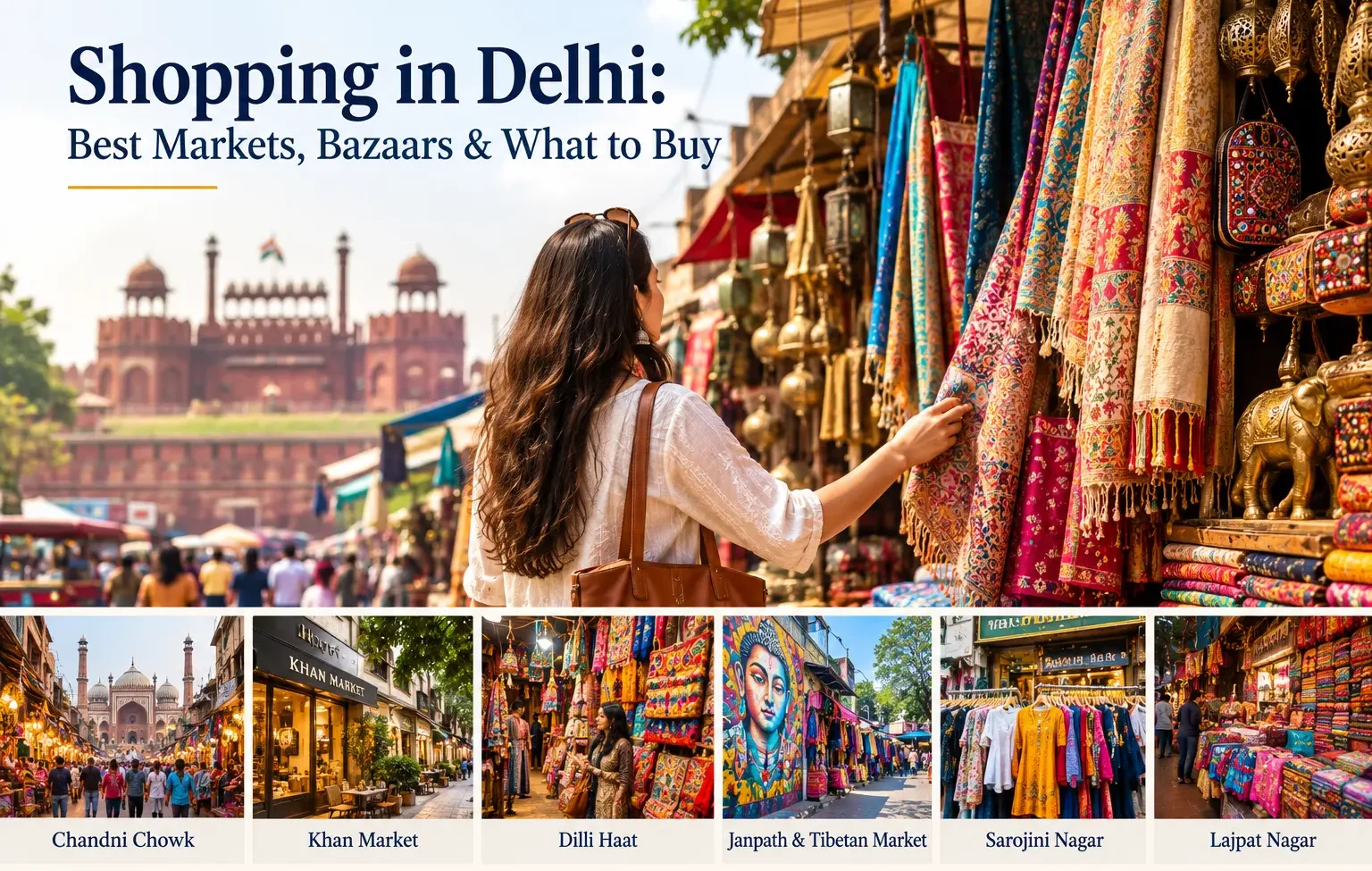
Often people ask, where do you actually go shopping in Delhi, is the market worth your rupees, and which are the best in the city?
At Bespoke India Holidays, we’ve watched the city work its magic on travelers again and again. The ones who go home happiest aren’t always the ones who saw the most monuments; they’re the ones who spent an unhurried afternoon in Delhi’s market, stopping to haggle over something they didn’t know they wanted until they saw it. Be it a hand-embroidered scarf, a jar of saffron, or a pair of jeweled shoes that make zero sense back home and complete sense in the moment.
If you only remember
Delhi’s markets can be treated as a shopping list to clear before the real sightseeing starts. Streets tampered by the smell of cardamom and rosewater, the sound of a silversmith’s hammer, and whatnot, this is where the city actually talks in one form or another.
Chandni Chowk, the most famous shopping street in Delhi, is older than the printing press which became common in most of the world. According to the Ministry of Tourism’s official Incredible India portal, Jahanara Begum, daughter of Emperor Shah Jahan, designed it as the commercial heart of the new Mughal capital.
Roughly a two-kilometer stretch that runs from the Red Fort’s Lahori Gate to Fatehpuri Masjid, each side lane has one specialty, and the layout has barely changed ever.
Dariba Kalan sells genuine silver jewelry, antique brassware, and rare oriental perfumes (Attar); Kinari Bazaar sells trims, sequins, and wedding outfits; Nai Sarak is Delhi’s book market; and Khari Baoli, at the western end, is reportedly Asia’s largest wholesale spice market, with sacks of turmeric and dried chilies stacked like a warehouse. Also look around for Zardozi and Chikankari embroidered textiles, a beautiful glimpse into traditional India.
Go on a weekday morning; most shops close on Sundays, and a cycle rickshaw beats walking once the lanes narrow.
Khan Market feels like a different city entirely, more like upscale chic and contemporary luxury. It is Delhi’s most fashionable retail address. Sophisticated U-shaped layout and unhurried leafy lanes full of independent bookstores, designer boutiques, tailored menswear, and polished cafés favored by Delhi’s cultural elite.
Come here to buy Indo-western apparel, organic skincare, designer home accents, and silver accessories, exquisite home décor, handmade leather goods – everything at a fixed, fair price.
If you only have time for one handicraft stop, make it Dilli Haat. This six-acre open-air, government-run bazaar near INA Market is a panorama of pan-Indian craftsmanship with roughly 60 stalls that rotate every fifteen days. So, what’s on offer genuinely changes from visit to visit.
Add Dilli Haat to your shopping destinations in Delhi, especially if you want authentic, purpose-built regional crafts like pottery, textiles, jewelry, and woodwork. Get your hands on Kashmiri walnut wood carvings, Madhubani hand-painted art from Bihar, Pashmina shawls, Rajasthani leather footwear (juttis), and South Indian brass statues.
Since you’re buying straight from registered National Award-winning artisans from across the country the and not a reseller, quality is high and prices are fair from the jump.
It’s also a home to a food court covering nearly every Indian state. One step and you’ve got an easy half-day sorted.
Janpath is popular for silver jewelry, leather bags, block-printed scarves, and Kashmiri shawls packed into narrow stalls. Right alongside it, at the Tibetan Market you get prayer flags, singing bowls, and Tibetan & Nepali silver, if you want to buy some of those in Delhi.
Sarojini Nagar is Delhi’s export-surplus goldmine, where fashion-conscious shoppers go. Overruns and samples made for Western brands are sold here for a small fraction of retail. It’s the best market for shopping trendy designer clothes in Delhi, so popular that the streets get genuinely packed on weekends. We recommend a weekday visit if you’d rather browse than battle crowds.
South Delhi locals actually shop for weddings at Lajpat Nagar, and the energy of its market shows when you walk down the street. Bridal wear lehengas, footwear, and costume jewelry are found across a dense grid of shops. The crowd is much smaller here compared to other shopping places in Delhi, which means you’ll get non-negotiable designs at better prices.
If Old Delhi is not on your list, you can start here instead. Ajmal Khan Road is Karol Bagh’s pedestrian shopping street with saree shops, footwear, electronics, and food joints throughout.
Connaught Place is the colonial-era commercial hub laid out in concentric circles. Walk through, and you’ll find multiple global brands, which is often useful for tourists. State government emporiums along Baba Kharak Singh Marg are fixed-price shops, each run by a state and selling its own handicrafts. Shopping here makes it easy to compare Kashmiri pashmina with Rajasthani textiles before deciding what’s worth buying elsewhere.
Save Hauz Khas for an afternoon when you’re not in a rush. Independent design boutiques and concept stores with a genuinely unusual backdrop of a 14th-century madrasa and a tomb overlooking a lake, with a deer park thrown in. Well, the view deserves your attention. It’s where you’ll find contemporary Indie fashion studios and modern Indian art galleries.
If your passion leans toward fine art and rare antiques, the Sunder Nagar enclave offers the best markets in Delhi for shopping fine goods. It is known for high-end art galleries, tea houses, and certified antique dealers specializing in Mughal artifacts, tribal jewelry, and miniature paintings.
India’s textile heritage is unmatched global wealth. In Delhi, you can buy exquisite Banarasi silk sarees, delicate Chanderi weaves, rich Kanjeevarams, and intricate hand-block-printed cottons.
Chikankari, the delicate white-thread embroidery associated with nearby Lucknow, carries a Geographical Indication (GI) tag, a form of government protection. Basically, the same idea as Champagne only coming from Champagne, and it’s your best guarantee you’re buying the real deal.
Known for its extraordinary warmth, featherlight weight, and silky texture, real Pashmina comes from the high-altitude Changthangi goats of Ladakh and is woven by Kashmiri artisans. Look for hand-spun weaves bearing official Silk Mark or Craft Mark certifications.
Delhi is a primary hub for traditional Kundan and Polki jewelry, refined in the royal courts of Rajasthan and Delhi. Polki uses uncut, natural diamonds set in pure gold foil, which creates an earthy brilliance. Trusted jewelers in South Delhi and Connaught Place offer hallmarked gold and certified precious stones.
Dariba Kalan in Chandni Chowk has traded in silver and gemstones for generations. Janpath and the Tibetan Market are better for costume and tribal-style silver pieces.
India is a spice hub, and no journey is complete without getting your hands on its sensory flavors. Khari Baoli’s wholesale spice stalls sell everything from single-origin saffron from Kashmir to garam masala blends, organic green cardamom, and high-grade tea flushes from Darjeeling and Assam. You can request vacuum-sealed packs for travel.
Hand-stitched juttis (traditional embroidered slip-on shoes) and leather bags are best across Janpath, Karol Bagh, and Dilli Haat. Get your feet on simple everyday pairs to colorful embroidered ones.
Blue pottery, brassware, wood carvings, and hand-block-printed home textiles are all easiest to find, compare, and buy directly from the maker at Dilli Haat. Everything with an Indian touch.
Old Delhi’s ittar (traditional alcohol-free perfume oil) shops near Chandni Chowk and Jama Masjid have supplied the city for generations. They are worth a stop even just to sample.
For many travelers, Delhi’s market ends up being the highlight. But shopping works best with someone who knows which silversmith in Dariba Kalan is worth your time, or which stall just rotated into Dilli Haat two days ago. You could absolutely figure this out on your own. But, that kind of local knowledge lives in real people, not pages.
It’s exactly what Bespoke India Holidays builds into every itinerary. Our travel specialists build private, tailor-made India tours that can include a guided market walk through Old Delhi’s back lanes, a private car & driver on call for the rest of the day, and a pace entirely set by you, not a tour bus schedule. You can also fold your Delhi shopping day into an India heritage tour or choose our Golden Triangle tour across Delhi, Agra, and Jaipur.
We handle the logistics, the negotiating know-how, and the local access. You handle the fun part, deciding what makes it into your suitcase.
Chandni Chowk, in Old Delhi. Built in 1650, it’s one of Asia’s oldest and busiest markets, known for jewelry, spices, textiles, and street food.
Dariba Kalan in Chandni Chowk is the traditional jewelry lane, known for silver, gold, and gemstones. For lighter, silver and tribal-style pieces, Janpath and the nearby Tibetan Market are good options.
Dilli Haat, hands down is a single stop for authentic, artisan-made pieces bought straight from the makers. Moreover, the state emporiums around Connaught Place are also a solid alternative.
You don’t need one. However, a private guide could considerably change the experience, particularly in dense areas like Old Delhi, where you need to know which lane and which shopkeeper to trust.
Premier carpet houses, fine art galleries, and antique stores in Delhi provide worldwide insured door-to-door shipping via major carriers (DHL/FedEx). Always ensure you keep the official merchant invoice, tax receipt, and export certification.
Our travel experts are here to help you craft the perfect itinerary — stress-free and tailored just for you.
Contact Our Travel Experts
Traveling India in monsoon is one of the best experiences. You will see less people at every destination which will…
The North India geographical contours include the majestic Himalayas and the historic Indo-Gangetic Plain. This part of India has seen…

India is a place that has nature that remains wild and natural. As you go through the forests, grasslands, and…
By:Bespoke admin
July 3, 2025
Planning a luxury honeymoon tour in India is complete with choosing the perfect destination, mode of transportation, and personalised arrangements that cater to the two…
Read Post
By:Acodez Web
August 27, 2026
Jaipur is one of those cities that can feel like a lot on your first visit. There are forts on the hills. There are palaces…
Read Post
By:Acodez Web
September 1, 2026
US citizens need a valid visa to enter India. The fastest option is the e-tourist visa for US citizens to India, which costs between $10…
Read Post