
Shopping in Jaipur Markets: Best Bazaars & What to Buy
Published on : September 1, 2026
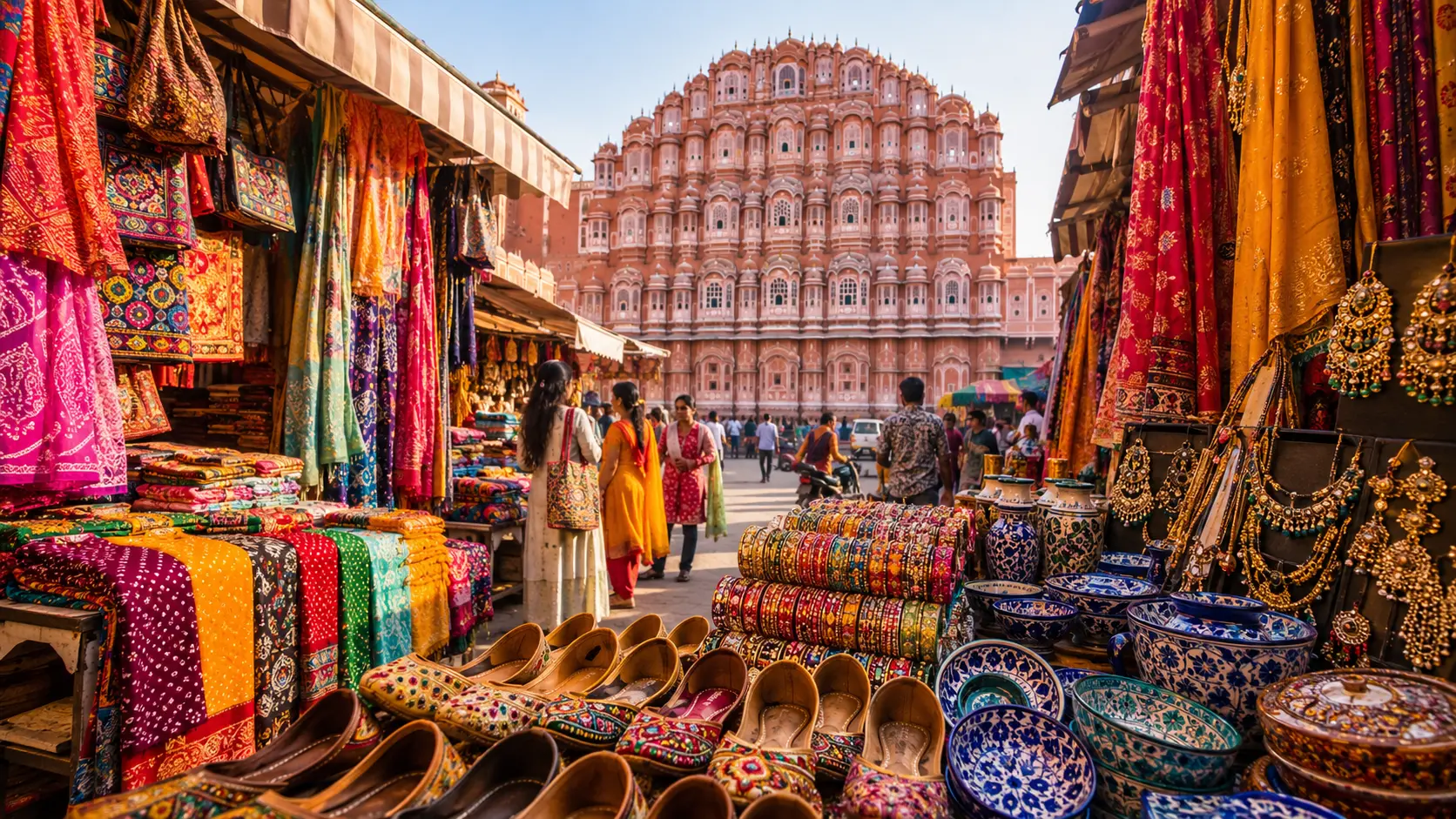
Shopping in Jaipur is more than picking up souvenirs. The city’s markets are closely tied to its history and craft traditions. You can find jewelry, block-printed fabrics, blue pottery, leather goods, bangles, and handmade home decor across the old city.
These markets also feel so different from one another for a reason.
Jaipur’s old city was carefully planned, with different areas known for different trades. Many of these traditions still continue today. You can walk from jewelry shops to textile stores and then find small workshops selling handmade crafts.
That makes it easier to shop with a plan. This guide covers Jaipur’s best markets and what to look for in each one. It also explains where to see traditional crafts being made, how bargaining works, and how to combine shopping with food and sightseeing.
If you are also exploring the city’s major attractions, shopping fits naturally into a wider visit to Jaipur.
Jaipur has several markets, and each one is known for different products. This quick overview will help you choose the markets that best match what you want to shop for.
| Market | Best for | Location |
| Johari Bazaar | Jewelry and gemstones | Near Hawa Mahal |
| Bapu Bazaar | Textiles and leather goods | Near New Gate |
| Tripolia Bazaar | Lac bangles and metalwork | Near City Palace |
| Kishanpole Bazaar | Handicrafts and home decor | Near Chandpol |
| Nehru Bazaar | Jootis and blue pottery | Modikhana |
| Sireh Deori Bazaar | Quilts and leather goods | Opposite Hawa Mahal |
| Indira Bazaar | Everyday shopping | Old city |
| Sanganer | Block printing and textiles | South of Jaipur |
Whether you are looking for traditional jewelry, handmade crafts, or everyday souvenirs, Jaipur has a market for almost every kind of shopper. Let’s explore each market in detail and see what makes it worth visiting.
Johari Bazaar: Jewelry and Gemstones
Johari Bazaar is Jaipur’s main jewelry market. It sits inside the walled city near Hawa Mahal and City Palace.
The market is especially known for kundan and meenakari jewelry.
Kundan uses gold settings with uncut gemstones. Meenakari adds colorful enamel work. In many designs, the enamel is on the back of the jewelry, making both sides part of the design.
Jaipur is also an important center for colored gemstones. You will find everything from finished jewelry to loose stones.
If you are buying something valuable, take your time. Compare a few shops and ask about gemstone certification before you buy.
Best for: Gold, silver, gemstones, kundan and meenakari jewelry
Location: Walled city, near Hawa Mahal
Bapu Bazaar is one of the easiest markets for first-time visitors.
It is known for colorful textiles, traditional footwear, and leather goods. Look for bandhani fabrics, block-printed cotton, scarves, bags, and Rajasthani jootis.
Bandhani is a traditional tie-dye technique that creates small patterns across the fabric. Block printing uses carved wooden blocks to create repeating designs.
Some shops can also arrange basic tailoring. That can be useful if you want a fabric made into a simple garment during your trip.
Best for: Bandhani and block-printed textiles, jootis, bags and leather goods
Location: Near New Gate, in the walled city
Tripolia Bazaar is a great place to find traditional bangles and metal goods.
The market is particularly known for lac bangles. Lac is a resin-based material that can be shaped and decorated with beads, mirrors, and stones.
Look for Maniharon Ka Raasta within the bazaar. Small workshops there still make bangles by hand.
Tripolia is also worth visiting if you want brass, copper, or iron cookware and home decor.
Best for: Lac bangles, brass and metal homeware
Location: Near City Palace
Kishanpole Bazaar is a good choice if you are looking for something larger than the usual souvenirs.
The market has shops selling wooden furniture, marble pieces, embroidered textiles, and decorative items.
Some pieces are too large to carry home in your luggage. If you find something you like, ask the seller about shipping options before buying.
Give yourself more time here than you would at a smaller souvenir market. The selection is broad, and prices can vary between shops.
Best for: Wooden furniture, marble carving and large decor pieces
Location: Old City, near Chandpol
Nehru Bazaar is known for colorful jootis and Jaipur’s famous blue pottery.
Jootis are traditional flat shoes that often feature embroidery and bright patterns. They make an easy souvenir because they are lightweight and available in many designs.
Blue pottery is another Jaipur specialty. The pieces are usually decorated with floral and geometric patterns and finished with a distinctive blue glaze.
If you are interested in the craft itself, the Jaipur Blue Pottery Art Centre also offers workshops alongside its retail space.
Best for: Jootis and blue pottery
Location: Modikhana area
Sireh Deori Bazaar sits directly across from Hawa Mahal, so it is easy to add to a sightseeing day.
The market is known for Jaipuri quilts, also called razais. These lightweight quilts are filled with cotton and pack more easily than heavier blankets.
You will also find camel leather bags, shoes, wall hangings, and other traditional items.
Because of its location, Sireh Deori works well as a short shopping stop after visiting Hawa Mahal.
Best for: Jaipuri quilts, camel leather goods and wall hangings
Location: Directly opposite Hawa Mahal
Indira Bazaar feels different from the more tourist-focused markets.
You will find everyday clothing, shoes, household goods, and other items that local shoppers use. It is a good place to see a more ordinary side of Jaipur’s shopping culture.
Prices may also feel more local than in markets that are heavily visited by tourists.
Choose Indira Bazaar if you want to spend some time shopping without focusing entirely on souvenirs.
Best for: Everyday clothing, shoes and household goods
Location: Old city
If you want to understand Jaipur’s textile traditions rather than simply buy the finished product, make time for Sanganer.
The town lies south of Jaipur and is known for its block-printing tradition. Local artisans use carved wooden blocks to create repeating patterns on cotton fabric.
A village tour of Sanganer lets you see the process up close. You may see artisans carving blocks, preparing fabric, and printing patterns by hand.
It is a good half-day experience for travelers who enjoy crafts and want more context behind what they see in Jaipur’s markets.
The layout of Jaipur’s old city helps explain why certain markets are known for particular products.
When Jaipur was founded in 1727, planners laid out organized streets and commercial areas. Different trades were concentrated in different parts of the city.
The boundaries are not as strict today. Shops sell a wider range of products than they did in the past. But many market areas still have strong connections to particular crafts.
That is why shopping by market can be much more useful than simply visiting the nearest souvenir shop.
You do not have to spend an entire day shopping.
Johari Bazaar and Bapu Bazaar are close to some of Jaipur’s best-known attractions. You can combine a morning of sightseeing with an afternoon of shopping.
Another good option is to add a street food tour to your market visit.
The same old-city streets are home to food stalls and small eateries. Stop for a kachori or a lassi between markets instead of trying to rush through several bazaars at once.
This makes the day feel more like exploring Jaipur than simply shopping.
Shopping in Jaipur is more enjoyable when you know what to expect. A little preparation can help you find the right products, compare prices, and avoid common problems.
Johari Bazaar is the main choice for jewelry. It is known for kundan and meenakari work as well as colored gemstones.
Popular choices include block-printed fabrics, bandhani textiles, blue pottery, lac bangles, jootis, and kundan or meenakari jewelry.
Yes. Bargaining is common in traditional markets. Start with a reasonable counteroffer and keep the conversation friendly.
Sanganer is one of the best places to see traditional block printing. A village tour to Sanganer can take you closer to the workshops and the printing process.
Most major bazaars are open daily, but individual shop hours can vary. It is best to check the market or specific shop before making a special trip.
Late morning and early evening are generally good times to visit. For a quieter experience, go earlier in the day.
Choose your markets based on what you want to buy. Compare prices before committing. Carry some cash and take your time. The best shopping experiences in Jaipur come from exploring the markets rather than trying to finish everything as quickly as possible.
Our travel experts are here to help you craft the perfect itinerary — stress-free and tailored just for you.
Contact Our Travel Experts
The desire of a romantic India honeymoon tours conjures images of solitary walks on a beach, watching the sunset together…
Step into Old Delhi and you step into a different side of the capital. Narrow lanes wind past old havelis,…

India is a country that reflects the essence of many worlds in one land. From their northern snow-capped mountains to…

By:Acodez Web
September 7, 2026
Delhi, the heartbeat of India, doesn’t fit neatly into a single postcard. Not one, but in reality, it’s three cities wearing one name. Old Delhi,…
Read Post
By:Bespoke admin
July 16, 2025
The Golden Triangle Tour in India is a popular trip route that links three of the most famous cities: Delhi, Agra, and Jaipur, which also…
Read Post
By:Acodez Web
September 8, 2026
Often people ask, where do you actually go shopping in Delhi, is the market worth your rupees, and which are the best in the city? …
Read Post