
Golden Triangle India: Complete Guide to Delhi, Agra and Jaipur
Published on : August 27, 2026
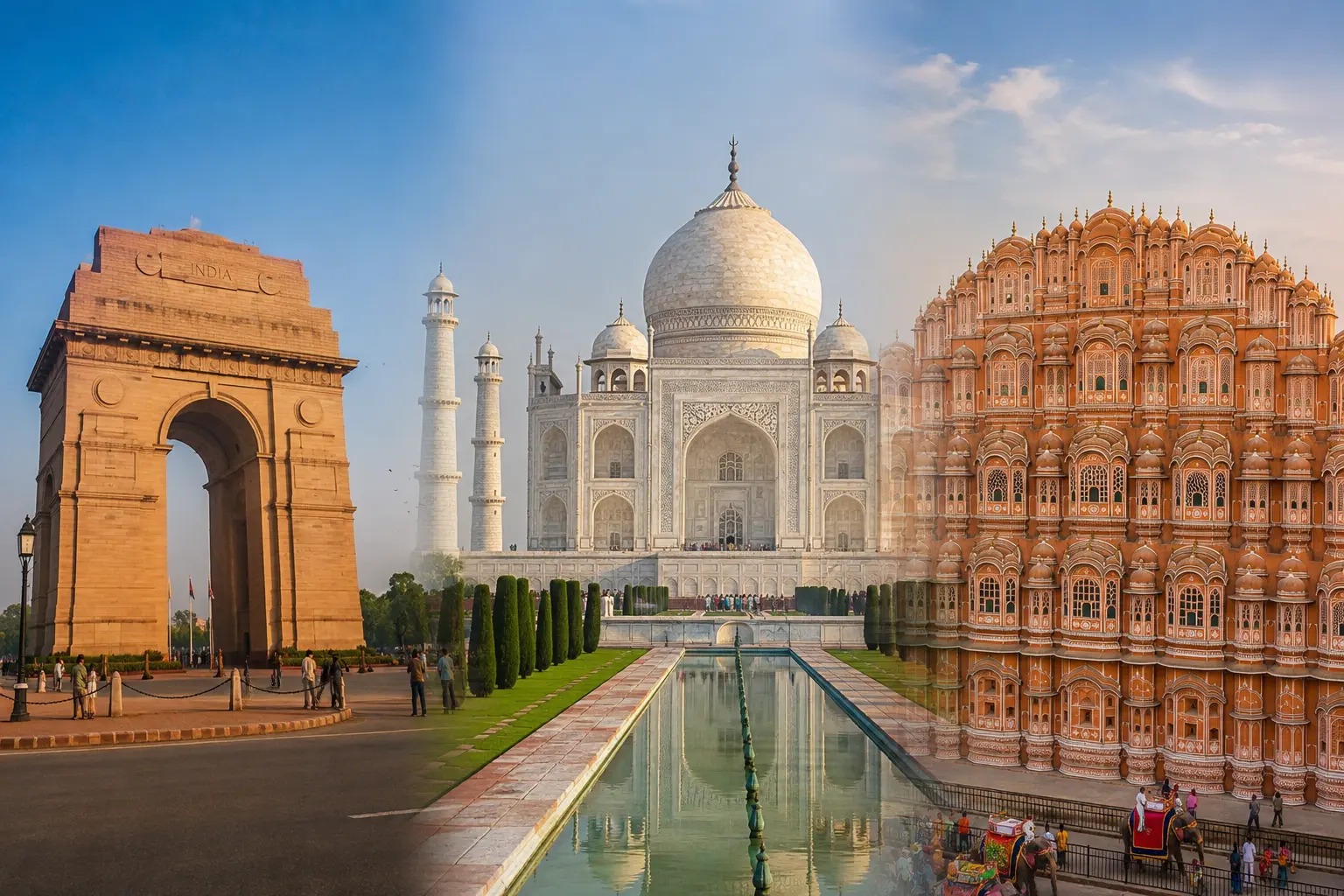
If you are visiting India for the first time, the Golden Triangle is one of the easiest ways to get a feel for the country. The route connects Delhi, Agra, and Jaipur. Each city has its own history, architecture, and character.
Delhi gives you a mix of old and new India. Agra is home to the Taj Mahal and some of the country’s finest Mughal monuments. Jaipur brings you into Rajasthan, with its forts, palaces, colorful markets, and royal history.
The three cities are close enough to visit on one trip. Yet they feel very different from one another. That contrast is what makes the Golden Triangle work so well. You can explore Mughal history in Delhi and Agra, then see a very different side of North India in Jaipur.
This guide explains what the Golden Triangle is, why these three cities belong together, how long you need, how to travel between them, and what you can add if you have more time.
The Golden Triangle is a popular travel route connecting Delhi, Agra, and Jaipur.
If you mark the three cities on a map, they form a rough triangle. Delhi sits to the north, Agra to the southeast, and Jaipur to the southwest. The full loop covers roughly 720 kilometers (450 miles).
The name simply comes from the shape of the route. The “golden” part doesn’t refer to gold or wealth.
What makes the route special is what you can see along the way. The three cities are home to major forts, palaces, tombs, temples, markets, and UNESCO World Heritage Sites.
For a first trip to India, it is a practical way to experience several important parts of the country’s history without spending most of your vacation traveling between distant destinations. India’s official tourism site also describes Delhi, Agra, and Jaipur as one of the country’s most traveled tourist circuits.
The three cities work together because each one shows a different part of North India’s history.
Delhi has been a center of power for centuries. The city carries layers of the Delhi Sultanate, Mughal Empire, and British colonial period. You can see this history in places such as the Red Fort and Humayun’s Tomb, while the streets around Old Delhi offer a very different look at the city.
Humayun’s Tomb is particularly important to the story of Mughal architecture. UNESCO describes it as the first major example of the Mughal garden-tomb tradition in India. Its design later influenced the architectural style that reached its best-known expression in the Taj Mahal.
Delhi is also the busiest and most modern of the three cities. That mix of historic sites, markets, food, and everyday life makes it a strong starting point for the route.
Agra is best known for the Taj Mahal, but the city offers more than one famous monument.
Mughal emperor Shah Jahan built the Taj Mahal as a mausoleum for his wife, Mumtaz Mahal. Agra Fort provides another look at the Mughal period, while Fatehpur Sikri shows how ambitious Mughal architecture could be beyond the better-known landmarks.
Fatehpur Sikri is about 40 kilometers from Agra, and Emperor Akbar built it in the 16th century. Its red sandstone buildings include the Jama Masjid, Buland Darwaza, and the tomb of Salim Chishti.
This is why Agra works best as more than a quick Taj Mahal stop.
Jaipur changes the mood of the journey. Founded in 1727 by Sawai Jai Singh II, Jaipur was planned as a new capital for the Kachwaha Rajputs. The city is known for its organized streets, colorful markets, forts, and palaces.
Amber Fort sits in the hills outside the city. The City Palace reflects Jaipur’s royal history. Hawa Mahal has become one of the city’s most recognizable landmarks.
Jaipur is also your introduction to Rajasthan. If you have extra time, the city can be the starting point for a longer journey through the state.
You can explore more of the city’s royal history in our guide to Jaipur’s forts and palaces.
The Golden Triangle becomes more interesting when you look at the cities together.
Delhi and Agra were both important centers of Mughal power. The rulers who built many of Agra’s famous monuments also shaped Delhi’s architecture and political history.
Jaipur tells a different story. Its Rajput rulers had a long and complicated relationship with the Mughal Empire. There were periods of conflict as well as alliances between Rajput kingdoms and Mughal rulers.
Fatehpur Sikri is a useful stop for understanding this period. Emperor Akbar built the city in the 16th century, and its architecture reflects a mix of cultural and religious influences.
So the route is not simply three famous cities placed next to one another. Each destination adds another part of the story.
By the time you reach Jaipur, you have moved from Delhi’s layered history through the Mughal heartland of Agra and into the royal world of Rajasthan.
The three cities are connected by major roads, making a private car with a driver a practical choice for the route.
| Route | Distance | Typical drive time (Car) |
| Delhi to Agra | 232 km (145 miles) | 3.5 to 4.5 hours |
| Agra to Jaipur | 241 km (149 miles) | 4.5 to 5.5 hours |
| Jaipur to Delhi | 311 km (193 miles) | 5 to 6 hours |
Actual drive times can vary with traffic and road conditions. One advantage of traveling by private car is the flexibility it gives you between cities. You can stop for lunch or add a place along the way instead of treating the journey as a simple transfer.
For example, Fatehpur Sikri fits naturally between Agra and Jaipur. If you have more time, you can also consider Chand Baori, the famous stepwell near Abhaneri.
This flexibility becomes especially useful when you are building a longer trip and want to keep the pace comfortable.
The Golden Triangle is popular because it lets you see a lot of India on one well-connected route. Delhi, Agra, and Jaipur each offer something different, so the trip never feels like you are seeing the same type of place twice.
Delhi brings together old monuments, busy markets, and modern city life. Agra is the center of Mughal history and home to the Taj Mahal. Jaipur offers grand forts, royal palaces, and Rajasthan’s colorful streets.
The route includes some of India’s best-known landmarks. You can see the Red Fort and Humayun’s Tomb in Delhi, the Taj Mahal and Agra Fort in Agra, and Amber Fort and City Palace in Jaipur.
You do not have to stop in Jaipur. If you have more time, you can continue into Rajasthan or add another destination such as Ranthambore, Udaipur, or Jodhpur. This makes the Golden Triangle easy to adapt to both shorter and longer trips in India.
You can cover the main sights of the Golden Triangle in 5 to 6 days. However, 6 to 10 days gives you more time to enjoy each city without rushing between destinations.
A typical trip can look like this:
| Destination | Suggested stay |
| Delhi | 2 to 3 days |
| Agra | 1 to 2 days |
| Jaipur | 2 to 3 days |
You can adjust the number of days based on your interests. Spend more time in Delhi and Agra if you are mainly interested in history and architecture. If you enjoy shopping, food, and local experiences, consider spending an extra day in Jaipur.
If you have more time, you can also add another Rajasthan destination such as Ranthambore, Udaipur, or Jodhpur.
For most travelers, October through March is the best time to visit the Golden Triangle.
The weather is more comfortable for sightseeing and outdoor activities. October and November are especially good if you want pleasant weather with fewer crowds. December through February brings cooler weather but is also the busiest period.
April through June can be very hot, particularly in Jaipur and Agra. If you travel during this period, start outdoor sightseeing early and avoid the hottest part of the afternoon.
The monsoon usually runs from July through September. Rain can affect outdoor plans, but the route is still possible if you keep your schedule flexible.
A good Golden Triangle trip is not about seeing as many places as possible. It is about giving each city enough time to enjoy it properly.
Delhi deserves more than a quick visit to the Red Fort. In Agra, leave enough time for the Taj Mahal and other Mughal landmarks. Jaipur also has plenty to keep you busy, from forts and palaces to markets and local experiences.
It also helps to decide what you want from the trip before planning the route. You may want to focus on history and architecture. You may prefer food, shopping, culture, or a slower pace.
If you want to plan the route around your interests, explore Bespoke India Holidays’ Golden Triangle tours and packages. You can also browse the sample itineraries for ideas on how to combine Delhi, Agra, Jaipur, and other destinations.
If you have more than a week, you can extend the classic route.
The best addition depends on what you want to experience.
Ranthambore is a natural choice if you want to add wildlife to a history-focused trip. The national park is known for its tiger population and can add a very different experience to the journey.
Udaipur is known for its lakes, palaces, and slower pace. It works well after Jaipur if you want to continue exploring Rajasthan.
Jodhpur offers a different side of Rajasthan. Mehrangarh Fort dominates the city, while the old neighborhoods below are known for their blue-painted houses.
Varanasi takes the trip beyond Rajasthan and the Golden Triangle. The city is known for its ghats along the Ganges, temples, and religious traditions.
You do not need to add several destinations. One or two well-chosen stops are usually better than trying to cover too much in a single trip.
The Golden Triangle includes Delhi, Agra, and Jaipur. Delhi offers layers of history and modern city life. Agra is known for the Taj Mahal and Mughal architecture. Jaipur brings Rajasthan’s forts, palaces, markets, and royal history.
Delhi is about 233 km (145 miles) from Agra, Agra is about 238 km (148 miles) from Jaipur, and Jaipur is about 268 km (166 miles) from Delhi. The complete loop is roughly 720 km (450 miles).
Six to ten days is a comfortable amount of time for a first visit. You can spend two to three days in Delhi, one to two days in Agra, and two to three days in Jaipur.
October through March is generally the best time. The weather is more comfortable for sightseeing, although December through February is also the busiest period.
Yes. You can extend the route with destinations such as Ranthambore, Udaipur, Jodhpur or Varanasi. The best choice depends on your interests and how much time you have.
Yes. It gives you a strong introduction to India’s history, architecture, culture, food, and daily life. The three cities are also close enough to combine in one well-paced trip.
Yes. A private trip gives you more control over the pace, sightseeing times, stops between cities, and the destinations you include. This is particularly useful if you want to combine the classic route with a longer Rajasthan itinerary.
Our travel experts are here to help you craft the perfect itinerary — stress-free and tailored just for you.
Contact Our Travel Experts
If nature is the only thing you need to recuperate, travel to Alappuzha and experience a remix of your…
The most popular tourist circuit in India, the Golden Triangle includes the three world famous cities – Delhi, Agra and…
Most people think they already know the Taj Mahal. They have seen the photos and read about the love story.…
By:Acodez Web
September 9, 2026
Delhi weather can make a world of difference in your enjoyment of the city. Winter is a nice time to travel. Mornings are cool and…
Read Post
By:Acodez Web
March 24, 2026
India is a place that has nature that remains wild and natural. As you go through the forests, grasslands, and wetlands, you soon realise that…
Read Post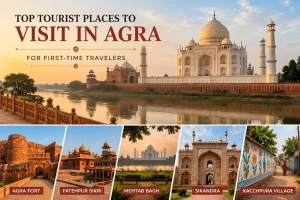
By:Acodez Web
September 3, 2026
Agra tends to catch first-time travelers off guard. You arrive expecting a monument and leave having understood an empire. The Taj Mahal is extraordinary. Nothing…
Read Post