
Old Delhi Travel Guide: History, Heritage, Markets & Experiences
Published on : October 13, 2026
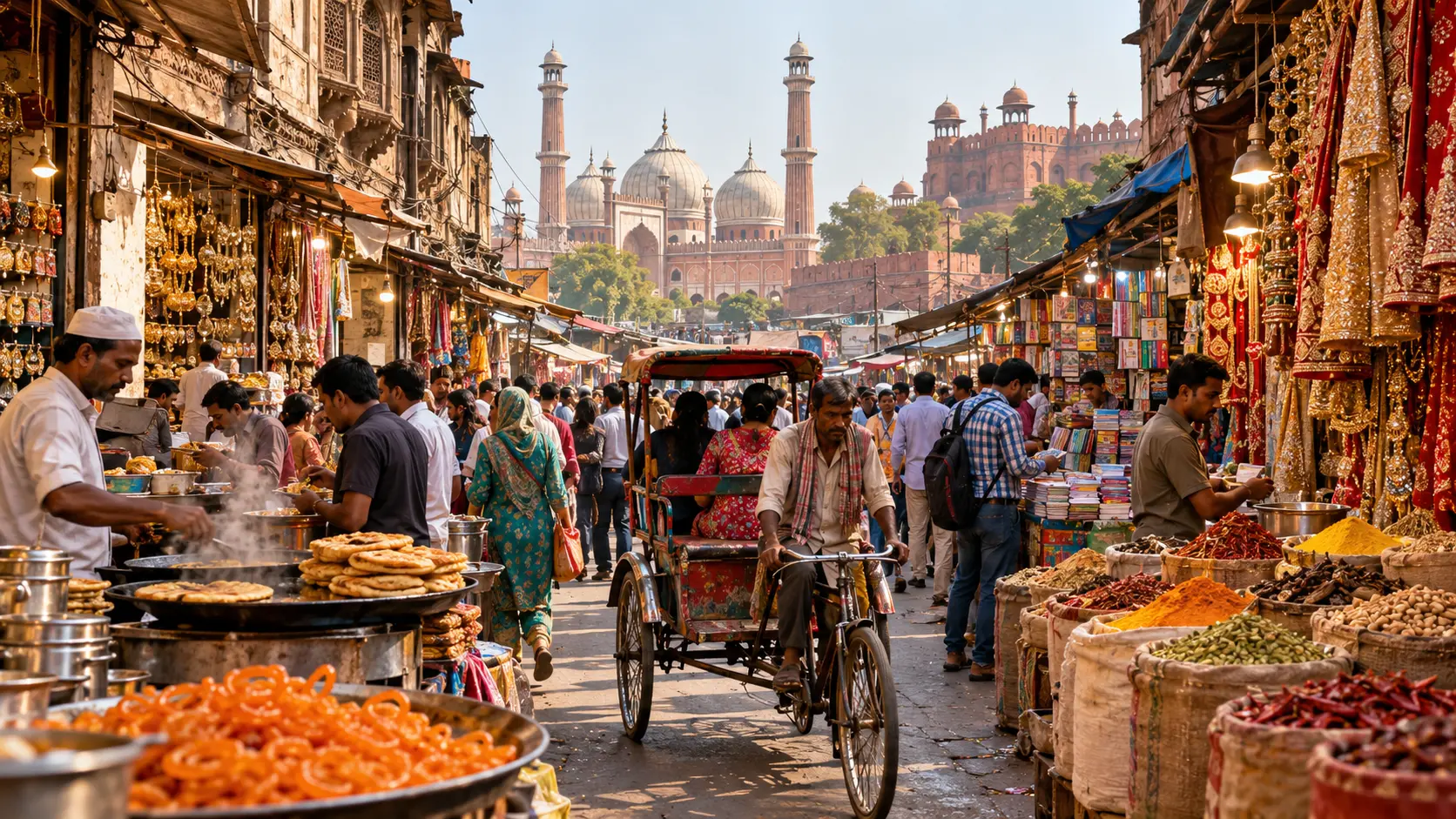
Step into Old Delhi and you step into a different side of the capital. Narrow lanes wind past old havelis, spice shops, mosques, and busy markets. Cycle rickshaws move through the crowds while the smell of kebabs, spices, and fresh jalebis fills the air.
It can feel busy at first, but that energy is part of what makes Old Delhi special. This is one of the few places in India where history, food, markets, and everyday life come together in such a small area.
This Old Delhi travel guide covers its history, important heritage sites, famous markets, local food, and experiences worth adding to your visit.
Old Delhi began as a new Mughal capital in 1639. Emperor Shah Jahan built the city and named it Shahjahanabad. It became the centre of the Mughal Empire and remained an important seat of power for around 200 years.
The walled city once housed traders, craftsmen, poets, and nobles. Its streets became important centres for art, culture, and trade in northern India.
The Mughal era eventually ended, and the British later developed New Delhi as the new capital. Yet Old Delhi retained much of its character. Many families still run shops and businesses passed down through generations.
Understanding this history makes exploring the old city more interesting. Its gates, mosques, markets, and narrow lanes each have a story to tell. You can explore more of this history through our guide on Delhi museum tour.
Old Delhi is more than a collection of historic buildings. It shows how different periods of Delhi’s history continue to exist alongside everyday city life.
You can visit a grand Mughal monument, walk through a centuries-old market, stop for street food, and watch local shopkeepers go about their daily routines, all within a few hours.
The area is home to major heritage sites, traditional markets, old food streets, and hidden corners that are easy to miss if you only visit the main attractions.
Old Delhi has several important landmarks. If you are visiting for the first time, these are the places worth including in your day.
The Red Fort is one of Old Delhi’s most famous landmarks and a UNESCO World Heritage Site. Shah Jahan built the massive red sandstone fort as his royal residence, and it remained the main Mughal residence for around two centuries.
Inside, you can see grand halls, marble structures, courtyards, and gardens. The fort also holds an important place in modern Indian history. The Red Fort has a special place in India’s Independence Day celebrations, with the prime minister hoisting the national flag and addressing the nation each year.
Allow at least a couple of hours if you want to explore the fort at a comfortable pace.
Jama Masjid is just a short walk from the Red Fort. Built by Shah Jahan, it has a large courtyard that can accommodate thousands of worshippers and remains an active place of worship.
You can climb one of its minarets for views across the rooftops and busy lanes of Old Delhi.
Since Jama Masjid is a place of worship, dress modestly and follow the local rules during your visit. The peaceful atmosphere inside contrasts sharply with the busy streets outside.
The major monuments are only part of Old Delhi. Its narrow lanes are also home to old havelis, which were once the residences of wealthy merchants and nobles.
Some have been restored, while others show the marks of age. You can also find small museums, Jain and Hindu temples, and quieter lanes tucked away behind the main markets.
Take some time to explore beyond the main attractions. This is where you get a better sense of everyday life in the old city.
If the monuments tell the story of Old Delhi’s past, its markets show how the city lives and works today.
Chandni Chowk is the main market area, with several smaller bazaars branching off its busy streets. Each market has its own speciality.
The markets can be crowded and noisy, but that is part of the experience. Bargaining is common, and exploring the different lanes can easily take several hours.
A cycle rickshaw is also a practical way to explore some of the narrower parts of Chandni Chowk.
Food is one of the biggest reasons to explore Old Delhi. The area is known for traditional dishes, long-running eateries, and busy food streets.
Some local favourites include:
If you are unsure where to eat, a guided food walk can make the experience easier. A food and heritage walk through Old Delhi takes you to selected food spots while also explaining the stories behind the dishes and the neighbourhood.
Old Delhi offers more than monuments and markets. A few simple experiences can make your visit more memorable.
A little planning can make your Old Delhi visit much easier.
Old Delhi is known for its Mughal heritage, historic monuments, busy markets, and famous street food. The Red Fort, Jama Masjid, Chandni Chowk, and Khari Baoli are among its best-known attractions.
Mughal emperor Shah Jahan established Old Delhi in the 1600s. He named the city Shahjahanabad and made it his capital.
Chandni Chowk is the main market area. Khari Baoli is known for spices, Dariba Kalan for silver jewellery, Kinari Bazaar for wedding items, and Nai Sarak for books and stationery.
Yes. Old Delhi offers a mix of Mughal heritage, historic markets, local food, and everyday city life. It is one of the most distinctive areas to explore in Delhi.
The Delhi Metro is one of the easiest options. Chandni Chowk and Lal Qila stations are close to the old city. Once there, you can explore the area on foot or by cycle rickshaw.
October to March is generally the most comfortable time to walk around Old Delhi. Arriving early in the morning can also help you avoid the biggest crowds.
Our travel experts are here to help you craft the perfect itinerary — stress-free and tailored just for you.
Contact Our Travel Experts
The city of Joy, Kolkata is a vibrant 350 years old metropolis and is the capital of West Bengal. Formerly…
Delhi doesn’t ease first-time visitors. One afternoon you’re staring up at the city’s tallest flex, and an hour later you’re…
The desire of a romantic India honeymoon tours conjures images of solitary walks on a beach, watching the sunset together…

By:Bespoke admin
December 20, 2025
This luxury India tour guide is researched and maintained by the Bespoke India Holidays team, a licensed luxury tour operator based in India with 15+…
Read Post
By:Acodez Web
September 24, 2026
Often people ask, where should you actually stay in Agra if you want to be close to the Taj Mahal, which hotels are worth booking,…
Read Post
By:Bespoke admin
March 8, 2010
Enter any chat room or community of travel enthusiasts and you will discover 90% of the world has heard the name of Kerala. Most…
Read Post